
A normal rental leasing timeline in 2026 runs 30 to 41 days from listing to signed lease nationally, broken into roughly a week for initial inquiries and showings, a few days for application and screening, and the remainder in negotiation, lease signing, and move-in coordination. Move-in itself typically follows within a week or two of lease signing.
Owners tend to panic at day 15. It’s a reasonable instinct, an empty unit feels like a fire that needs putting out immediately, but 15 days into a listing is often right on pace, not behind. Without a clear picture of what a normal timeline looks like, it’s hard to tell the difference between a vacancy that’s proceeding normally and one that’s actually stuck.
Knowing the stages, and roughly how long each one should take, gives you something more useful than a gut feeling. It gives you a diagnostic tool. If you’re at day 20 with barely any inquiries, that’s a different problem than being at day 20 with plenty of showings and no applications, and the timeline itself helps you tell which one you’re facing.
Stage One: Listing to First Inquiries (Days 1-7)
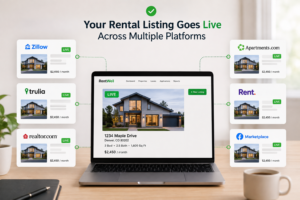
The first week is almost entirely about visibility and first impressions. A well-priced, well-photographed listing syndicated across multiple platforms should start generating inquiries within the first 24 to 48 hours. If a full week passes with minimal inquiry activity, that’s an early signal worth acting on rather than waiting out, usually pointing to pricing above market or photos that aren’t converting views into interest.
SEO-driven leads convert at meaningfully higher rates than listing-syndication leads alone, which is part of why a management company’s own website and search presence matters, not just the third-party listing sites.
Stage Two: Showings to Applications (Days 5-15)

Showings typically overlap with the inquiry stage rather than following it neatly in sequence, since the fastest-responding leads often schedule a tour within the first few days. This stage is where presentation earns its keep. A clean, well-staged unit converts a meaningfully higher share of showings into applications than an empty, poorly lit one.
If showings are happening at a healthy pace but application volume is thin, the issue usually isn’t the marketing, it’s something about the unit itself or the price becoming a sticking point once a prospective tenant is standing in the space. That’s a different fix than a listing that isn’t generating showings at all.
A vacancy stuck at the showing stage and a vacancy stuck at the inquiry stage look identical from the outside. They need completely different fixes.
Stage Three: Screening and Approval (Days 15-20)
Once an application comes in, screening, verifying income, pulling credit, and contacting previous landlords, typically takes two to four business days when done thoroughly. This is the stage owners are sometimes tempted to rush, especially after a slow start to the vacancy. Resist that instinct. A few extra days here to verify rental history properly is far cheaper than a bad tenant placed because the screening got rushed under vacancy pressure.
Stage Four: Lease Signing to Move-In (Days 20-30+)
Once an applicant is approved, lease preparation and signing typically happens within a few days, especially with e-signature tools that remove the back-and-forth of physical paperwork. According to research on leasing funnel friction, e-signature with immediate delivery and a clear signing deadline resolves most of the delay that otherwise happens between approval and a signed lease.
Move-in itself usually follows within one to two weeks of signing, giving the incoming tenant time to coordinate movers and utilities, and giving the property time for a final walkthrough and any last touch-ups. National data puts the median time from listing to lease at 41 days as of early 2026, meaning move-in typically lands somewhere around the six-week mark from the day the listing first went live.
What “Normal” Looks Like, Stage by Stage
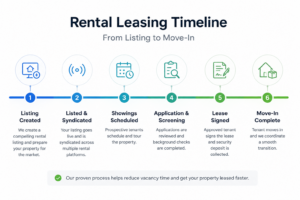
| Stage | Typical Duration | What Should Be Happening |
|---|---|---|
| Listing to first inquiries | Days 1-7 | Steady inquiry volume within 48 hours if pricing and photos are strong |
| Showings | Days 5-15 | Scheduled tours converting at a healthy rate into applications |
| Screening and approval | Days 15-20 | Thorough verification, 2-4 business days, not rushed |
| Lease signing | Days 20-25 | Fast turnaround with e-signature tools |
| Move-in coordination | Days 25-35+ | Final walkthrough and touch-ups completed before move-in day |
When You’re on Pace vs. When Something’s Actually Wrong

You’re likely on pace when:
- You’re within the first two weeks and inquiries are steady, even if applications haven’t come in yet
- Showings are scheduled and happening regularly
- Screening is thorough rather than rushed, even if it adds a few days
Something’s actually off when:
- You’re past two weeks with minimal inquiry activity at all
- Showings are happening but converting to few or no applications
- You’ve been past 45 days with no clear diagnosis of where the funnel is breaking down
Getting Started: Tracking Your Own Leasing Timeline

Track the date at each stage, not just the total days vacant. Knowing when inquiries started, when showings happened, and when applications came in tells you where delays are actually occurring.
Compare your timeline to local market data, not national averages. Philadelphia and Pittsburgh neighborhoods can vary meaningfully from each other and from national figures.
Set a decision point at day 14. If inquiry volume is weak by then, that’s the moment to reassess pricing or photos rather than waiting it out further.
Don’t compress the screening stage under vacancy pressure. A few extra days of thorough screening costs far less than a bad placement made in a rush.
Ready to See a Realistic Timeline for Your Property?
If you’re not sure whether your vacancy is on pace or genuinely stuck, a second set of eyes on where your specific listing sits in the funnel is worth having before you change anything.
Frequently Asked Questions
How long does it normally take to lease a rental property?
National data from early 2026 puts the median time from listing to signed lease at around 41 days, though this varies by market, property type, and pricing accuracy. Move-in typically follows within one to two weeks of signing.
At what point should I worry that my vacancy is taking too long?
If you’re two weeks in with minimal inquiry activity, or showings are happening but not converting to applications, those are signals worth investigating rather than waiting out. Being at day 15 with steady activity, even without a signed lease yet, is usually still on pace.
How long does tenant screening typically take?
Thorough screening, including income verification, credit checks, and contacting previous landlords, typically takes two to four business days once an application is submitted. Rushing this stage under vacancy pressure increases the risk of a bad placement.
How quickly should lease signing happen after an applicant is approved?
With e-signature tools, lease signing typically happens within a few days of approval. Delays at this stage are usually a process issue, like slow document turnaround, rather than a tenant issue.
Does move-in happen right after lease signing?
Usually not immediately. Move-in typically follows within one to two weeks of signing, giving the incoming tenant time to coordinate movers and utilities and giving the property time for a final walkthrough and any remaining touch-ups.
Why is my rental taking longer to lease than it did a few years ago?
National vacancy rates and time-to-lease figures have both risen since 2019, with median time-to-lease reaching a multi-year high in early 2026. Softer market conditions and fewer leads per listing mean even a well-run leasing process can take longer than it did in a tighter market.
How Rentwell Helps Owners Make This Shift
This is the exact shift Rentwell builds for owners across Philadelphia and Pittsburgh: leasing systems that fill vacancies on a predictable schedule, a maintenance program that catches issues before they get expensive, and owner reporting that answers the question before it gets asked. Owners get their hours back, and they get them back with a clearer picture of how each property is actually performing.
If self-managing is starting to feel like a second job instead of an investment, a second set of eyes on the setup costs nothing.
Rentwell is a full-service property management company serving Philadelphia, Pittsburgh, West Chester, and the surrounding Pennsylvania communities. With offices in Clifton Heights, Pittsburgh, and West Chester, Rentwell helps real estate investors protect their assets, reduce operational stress, and build long-term wealth through professional property management.