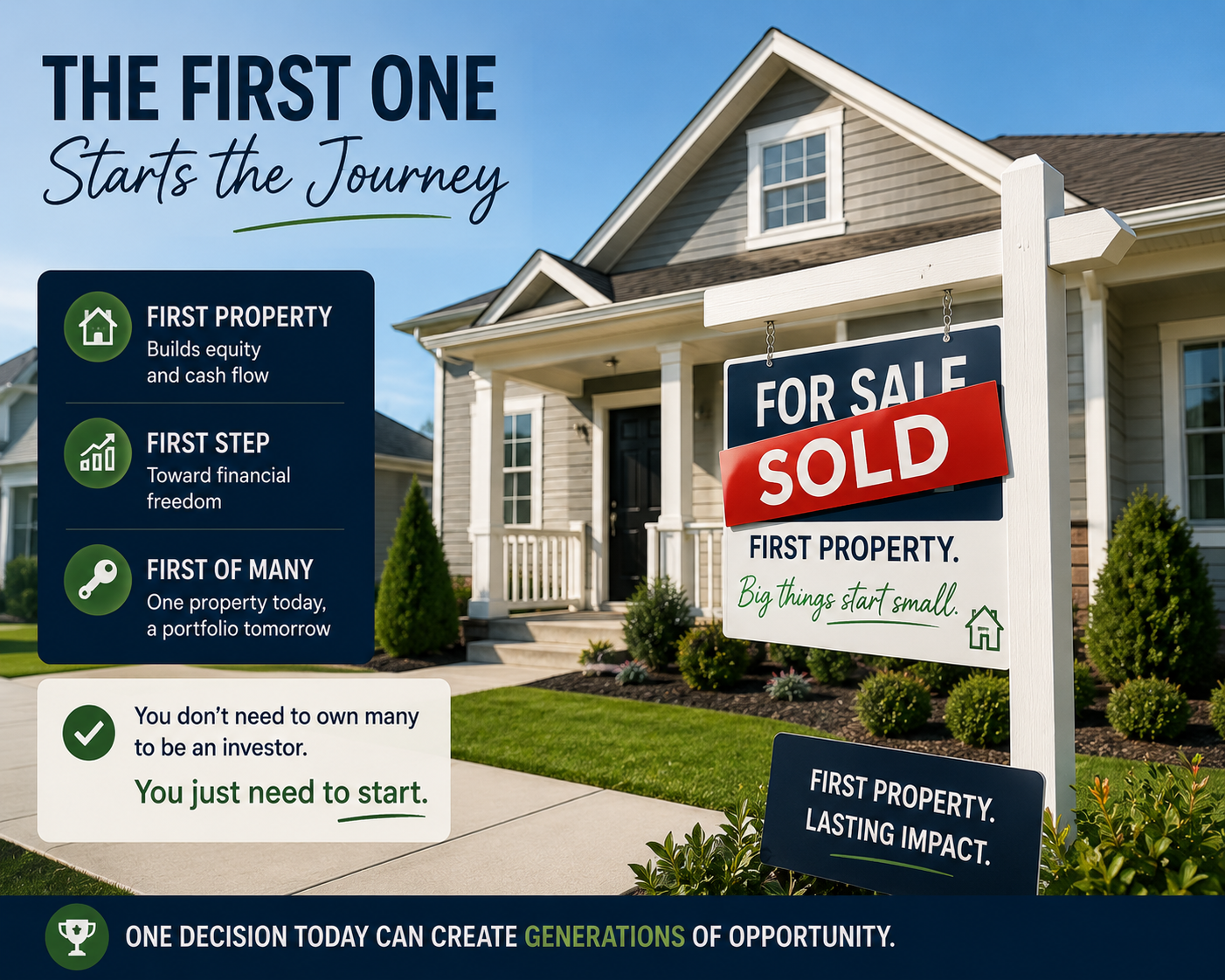
Realistically growing from one rental to ten typically follows three stages: properties one through three or four financed conventionally while you learn the fundamentals, properties four through six where financing and operations become the real bottleneck, and properties six through ten built on DSCR loans and delegated management. Conventional mortgage guidelines cap most investors at 10 financed properties, which is why the financing strategy has to change well before you get there.
Ten rental properties sounds like a nice round number to build a plan around, and it’s tempting to picture the path there as buying the same way ten times in a row. It doesn’t work that way. The tools, the financing, and the operational demands at property two look nothing like what’s required at property eight, and investors who don’t plan for that shift tend to stall out right around the point where conventional financing and DIY operations both start to break down.
Understanding the stages ahead of time doesn’t just make the growth smoother. It tells you which problem you’re actually solving at each point, since the fix for a financing bottleneck is completely different from the fix for an operational one, and confusing the two wastes time you don’t need to lose.
Stage One: Properties One Through Three, Learning the Fundamentals
The first few properties are where you build the judgment everything else depends on. The right focus here is learning, buying in markets you actually understand, self-managing where feasible to understand operations firsthand, and prioritizing cash flow over appreciation while you’re still building a track record.
Conventional financing works well at this stage, competitive rates, familiar underwriting, a process most first-time investors can navigate without specialized lending relationships. The goal isn’t speed here. It’s building underwriting discipline, honest vacancy assumptions, real maintenance reserves, so the habits carry forward cleanly as the portfolio grows.
Stage Two: Properties Four Through Six, Where the Real Bottlenecks Show Up
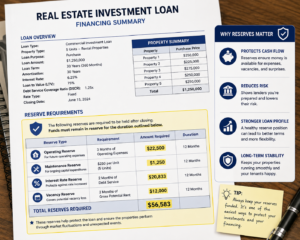
This is the stage where things stop feeling like a hobby and start feeling like a business, sometimes uncomfortably fast. Financing and operations become the actual bottlenecks during this acceleration phase, not deal availability. Conventional lending rules around reserves tighten meaningfully here, Fannie Mae increases reserve expectations as financed-property count rises, and borrowers with more than four properties often need significantly more cash reserves per property than earlier purchases required.
Maintenance coordination shifts too, from an occasional handyman call to an actual workflow problem that a spreadsheet and good intentions can’t keep up with. This is also, not coincidentally, the exact stage where owners who haven’t planned for delegation start feeling the operational strain described elsewhere in this pillar.
The bottleneck at property five isn’t finding a good deal. It’s whether your financing and your systems can actually carry the deal you already found.
Stage Three: Properties Six Through Ten, DSCR Financing and Delegated Operations
Conventional mortgage guidelines cap most investors around 10 financed properties, and the practical wall often arrives earlier than that hard number suggests. According to research, this is why serious portfolios migrate to DSCR loans, debt-service coverage ratio financing that qualifies based on the property’s rental income rather than the borrower’s personal income or existing debt load. That removes the two constraints that otherwise cap conventional scaling: personal debt-to-income limits and the financed-property count ceiling itself.
Operationally, this stage requires the same shift in reverse. You manage by dashboards, standard operating procedures, and delegated execution, whether that’s a property manager, defined internal roles, or a hybrid, rather than personal hands-on involvement in every property. Trying to self-manage ten scattered properties with the same system that worked for two is close to a guaranteed path to burnout.
The Financing Ladder, Stage by Stage
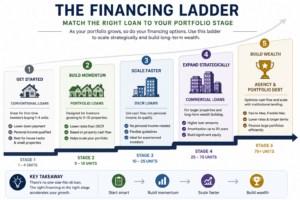
| Stage | Property Count | Primary Financing | Primary Constraint |
|---|---|---|---|
| Foundation | 1-3 | Conventional mortgage | Learning curve, not financing |
| Acceleration | 4-6 | Conventional plus early DSCR | Reserves and operational bandwidth |
| Portfolio operator | 6-10 | DSCR loans | Delegated systems, not deal flow |
When to Switch Financing Strategies vs. When to Stay the Course
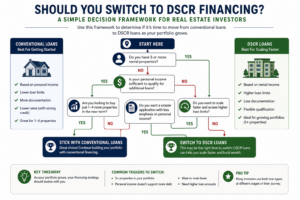
Consider shifting toward DSCR financing when:
- You’re approaching four financed properties and conventional reserve requirements are tightening noticeably
- Your personal debt-to-income ratio is becoming a limiting factor rather than the deal quality itself
- You want to keep scaling past the conventional 10-property practical ceiling
Conventional financing is still fine when:
- You’re in the first one to three properties and still building underwriting discipline
- Rates and terms remain more competitive than DSCR alternatives at your current stage
- You’re not yet running into reserve or DTI constraints
Getting Started: Building Your Own Growth Roadmap

Define your buy box before you scale, not after. Markets, asset types, price range, and target tenant profile, decided in advance, keep growth intentional rather than opportunistic.
Map your financing ladder ahead of time. Know roughly when you’ll need to transition from conventional to DSCR financing, rather than discovering the constraint mid-application.
Build your operational systems before property five, not after. The workflow that gets you through property three won’t survive property seven without real infrastructure behind it.
Stress-test your numbers conservatively at every stage. Reducing projected rental income by 5 to 10% in your underwriting reveals whether your portfolio still holds up under pressure, before a softer market forces the test on you.
Ready to Build the Operational Side of Your Growth Plan?
Financing gets you to ten properties. Operations are what determine whether owning ten properties actually feels like the freedom you were building toward.
Frequently Asked Questions
How many rental properties can I finance with a conventional mortgage?
Conventional mortgage guidelines from Fannie Mae generally cap most investors at 10 financed properties, though the practical constraint often arrives earlier, around property four or five, as reserve requirements increase with each additional financed property.
What is a DSCR loan and why do investors use it to scale past a few properties?
A DSCR (debt-service coverage ratio) loan qualifies based on a property’s rental income relative to its debt payments, rather than the borrower’s personal income or existing debt. This removes the personal debt-to-income ceiling and the financed-property count limit that constrain conventional financing, making it the primary tool for scaling past four to six properties.
At what point should I stop self-managing and delegate operations?
Many owners hit an operational bottleneck around the same stage financing becomes constrained, roughly properties four through six, when maintenance coordination and tenant communication outgrow a system built on memory and spreadsheets.
How much in reserves do lenders require for multiple financed properties?
Requirements vary by lender and loan type, but reserve expectations generally increase as financed-property count rises. Conventional borrowers with more than four financed properties often need meaningfully more reserves per property than earlier purchases required, and DSCR lenders typically require 3 to 12 months of payments in reserve per property.
Should I prioritize cash flow or appreciation in my first few rental properties?
Most scaling frameworks recommend prioritizing cash flow over appreciation in the early stages, since consistent cash flow is what builds the track record and reserves needed to qualify for financing as the portfolio grows.
Is it realistic to go from one rental property to ten?
Yes, but not on the same financing and operational approach that worked for property one. Realistic growth to ten properties typically requires shifting financing strategy around property four to six and building delegated operational systems before the portfolio outgrows what one person can track manually.
How Rentwell Helps Owners Make This Shift
This is the exact shift Rentwell builds for owners across Philadelphia and Pittsburgh: leasing systems that fill vacancies on a predictable schedule, a maintenance program that catches issues before they get expensive, and owner reporting that answers the question before it gets asked. Owners get their hours back, and they get them back with a clearer picture of how each property is actually performing.
If self-managing is starting to feel like a second job instead of an investment, a second set of eyes on the setup costs nothing.
Rentwell is a full-service property management company serving Philadelphia, Pittsburgh, West Chester, and the surrounding Pennsylvania communities. With offices in Clifton Heights, Pittsburgh, and West Chester, Rentwell helps real estate investors protect their assets, reduce operational stress, and build long-term wealth through professional property management.