A rental portfolio that doesn’t own you is built on delegation decided in advance, not under pressure, clear systems that don’t depend on your memory, and a defined limit on how many properties you’ll personally touch before bringing in professional support. The alternative, growing unit count without growing the systems underneath it, is how a passive income strategy quietly turns into an unpaid second job.
Nobody sets out to build a portfolio that owns them. It happens gradually. The first property is manageable, even fun. The third one still feels okay, mostly. Somewhere around the fifth or sixth, the owner notices they haven’t had a real day off in a while, and the thing that was supposed to buy back their time has started consuming more of it than their actual job does.
The good news is this outcome isn’t inevitable, and it isn’t really about how many properties you own. It’s about whether you decided, deliberately and in advance, how the workload would scale as the portfolio did, or whether you’re figuring that out reactively, one overwhelmed week at a time.
The Trap: Growth That Outpaces Your Systems
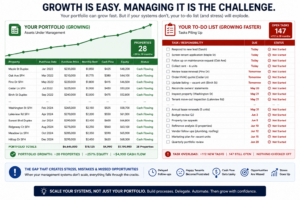
According to research, landlords managing growing portfolios typically lose the most time to repetitive administrative tasks, tenant messages, maintenance coordination, lease renewals, rather than the strategic decisions that actually drive returns. That imbalance is the trap. The work that grows fastest as your portfolio expands is exactly the work that generates the least value for the time it consumes.
Systems that work fine for one or two properties often start breaking down the moment volume increases, more leases, more transactions, more maintenance activity, all hitting a workflow that was never built to handle that scale. The portfolio doesn’t have to grow that large before this becomes a real problem. It just has to outpace whatever system is currently managing it.
Decide Your Personal Capacity Before You Need To
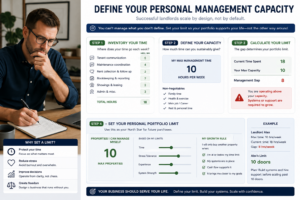
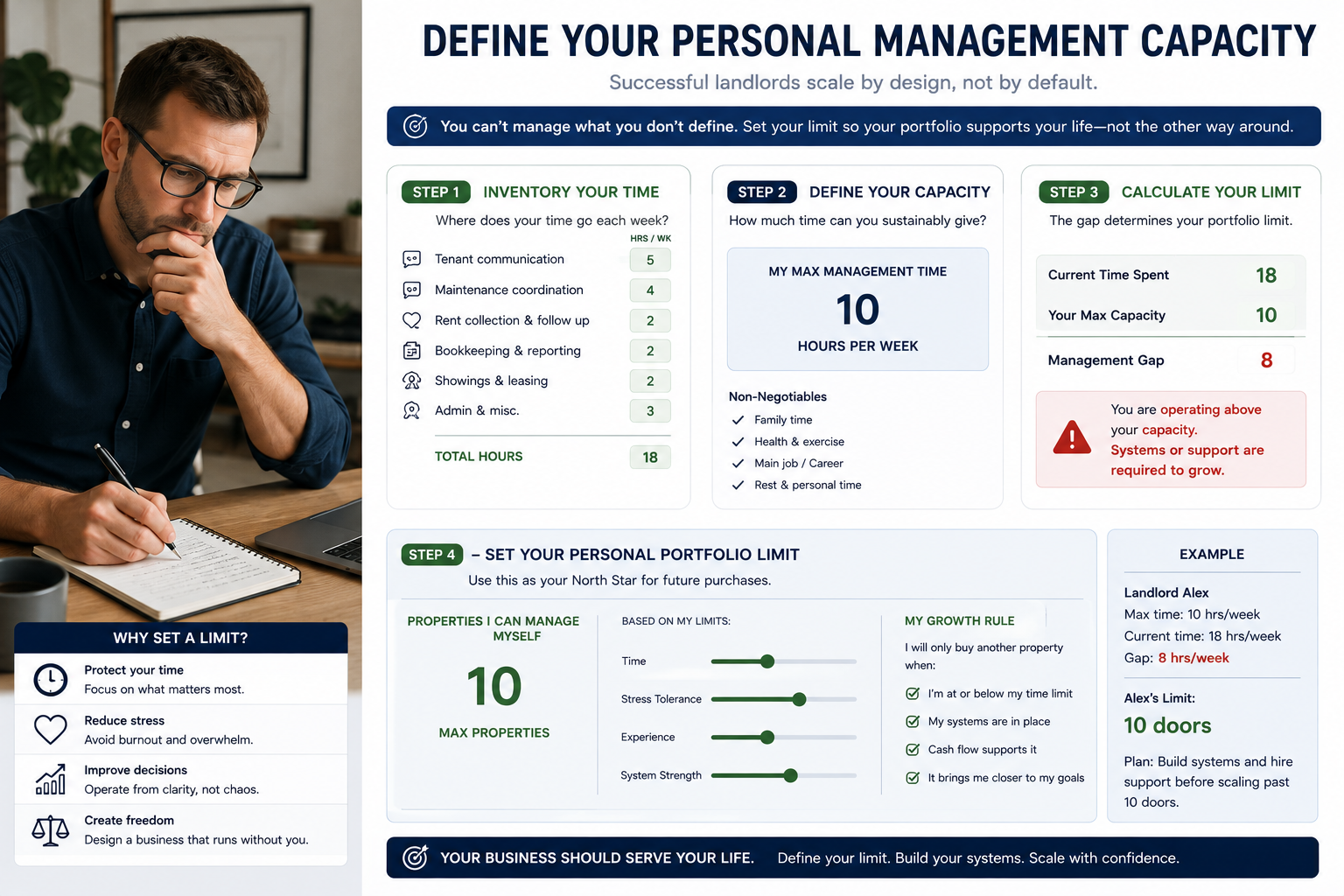
The owners who avoid the trap tend to set an explicit limit ahead of time: I’ll self-manage up to this many properties, and beyond that, I bring in help. Deciding this number while you’re not yet overwhelmed produces a much better decision than making it in the middle of a burnout spiral, when the instinct is often to just push through rather than change course.
There’s no universal right number. It depends on your other obligations, how close the properties are to each other and to you, and how much of the administrative work you’re already delegating in other parts of your life. What matters is having a number at all, rather than discovering your limit only after you’ve already blown past it.
The portfolio doesn’t decide when it’s too big for you to handle alone. You do, and that decision is a lot better made in advance than in the middle of a crisis.
Build Delegation Into the Plan, Not as an Emergency Fix
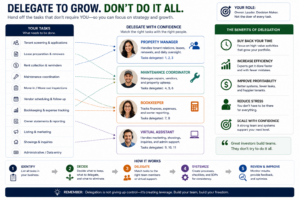
Delegation works best when it’s planned rather than reactive. That might mean professional full-service management from the start for out-of-state or otherwise less hands-on properties. It might mean back-office support that handles the administrative and financial layer while you keep hands-on control of tenant relationships. It might mean simply defining, in writing, which tasks you’ll always do yourself and which ones get handed off the moment your portfolio crosses a certain size.
According to Research, self-managing landlords spend an average of 10 to 20 hours a month per property. Run that math against your own portfolio size honestly, and the point at which delegation becomes financially obvious, not just emotionally appealing, usually arrives earlier than most owners expect.
Passive vs. Consuming: What Separates the Two

| Element | Passive Portfolio | Consuming Portfolio |
|---|---|---|
| Delegation decision | Made in advance, before overwhelm hits | Made reactively, mid-crisis |
| Systems | Documented, don’t depend on memory | Informal, live in the owner’s head |
| Growth pace | Matched to what current systems can handle | Outpaces the systems supporting it |
| Owner’s weekly time cost | Predictable and bounded | Unpredictable, tends to expand |
| Emotional experience | Manageable, even during growth | Increasing dread and reactivity |
When You’re Still in Control vs. When the Portfolio Has Taken Over
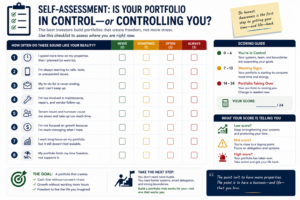
You’re still in control when:
- You can take a real weekend off without checking in constantly
- Adding a property feels like a deliberate decision, not something that happened to you
- Your systems, whatever they are, don’t depend entirely on your personal memory
The portfolio has taken over when:
- You can’t remember the last time you weren’t at least a little anxious about a property
- Growth has happened faster than your ability to track it accurately
- You’re avoiding the idea of adding another property, not because the deal isn’t good, but because you can’t imagine handling one more thing
Getting Started: Structuring Growth on Your Terms
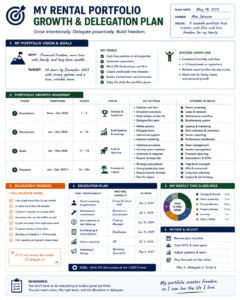
Set your personal management capacity number now, before you need it. Deciding this in a calm moment produces a better answer than deciding it during a bad week.
Write down which tasks you’ll always delegate, regardless of portfolio size. Some tasks, like after-hours emergency response, are worth handing off from day one for most owners.
Revisit your capacity number honestly every time you consider a new property. A number set two years ago may not reflect your current bandwidth.
Choose delegation partners before you’re desperate for one. Researching and vetting a property manager under time pressure produces worse decisions than doing it with room to think.
Ready to Build Growth That Doesn’t Cost You Your Time?
If you’re weighing your next property and wondering whether your current systems can actually absorb it, that’s worth figuring out before you buy, not after.
Frequently Asked Questions
How many rental properties can I self-manage before it becomes too much?
There’s no universal number. It depends on your other obligations, proximity to your properties, and how much administrative work you’re already delegating. Setting a personal limit in advance, before you’re overwhelmed, produces a better decision than discovering your limit reactively.
What’s the difference between a passive rental portfolio and one that consumes my time?
A passive portfolio runs on documented systems and delegation decided in advance, so growth doesn’t proportionally increase your personal workload. A time-consuming portfolio grows unit count faster than its supporting systems, which means administrative burden compounds with every new property.
Should I plan for delegation before I actually need it?
Yes. Deciding delegation triggers and vetting potential partners in a calm moment produces better outcomes than making those decisions reactively during a burnout crisis, when time pressure often leads to rushed choices.
How much time does self-managing a rental property actually take?
Research puts the average at 10 to 20 hours per month per property, covering tenant communication, maintenance coordination, and administrative work. That number scales with each additional property, which is why unplanned growth often outpaces an owner’s available time.
Is hiring a property manager the only way to keep a portfolio from taking over my time?
No. Full-service management is one option, but back-office support services, virtual assistance, and clearly defined internal delegation can also reduce the time burden while keeping more hands-on control, depending on what fits your situation.
What are the early warning signs that a portfolio is starting to take over my life?
Common signs include growing anxiety about your properties, difficulty remembering the last uninterrupted weekend, and avoiding good deals not because they’re bad investments but because you can’t imagine handling one more responsibility.
How Rentwell Helps Owners Make This Shift
This is the exact shift Rentwell builds for owners across Philadelphia and Pittsburgh: leasing systems that fill vacancies on a predictable schedule, a maintenance program that catches issues before they get expensive, and owner reporting that answers the question before it gets asked. Owners get their hours back, and they get them back with a clearer picture of how each property is actually performing.
If self-managing is starting to feel like a second job instead of an investment, a second set of eyes on the setup costs nothing.
Rentwell is a full-service property management company serving Philadelphia, Pittsburgh, West Chester, and the surrounding Pennsylvania communities. With offices in Clifton Heights, Pittsburgh, and West Chester, Rentwell helps real estate investors protect their assets, reduce operational stress, and build long-term wealth through professional property management.