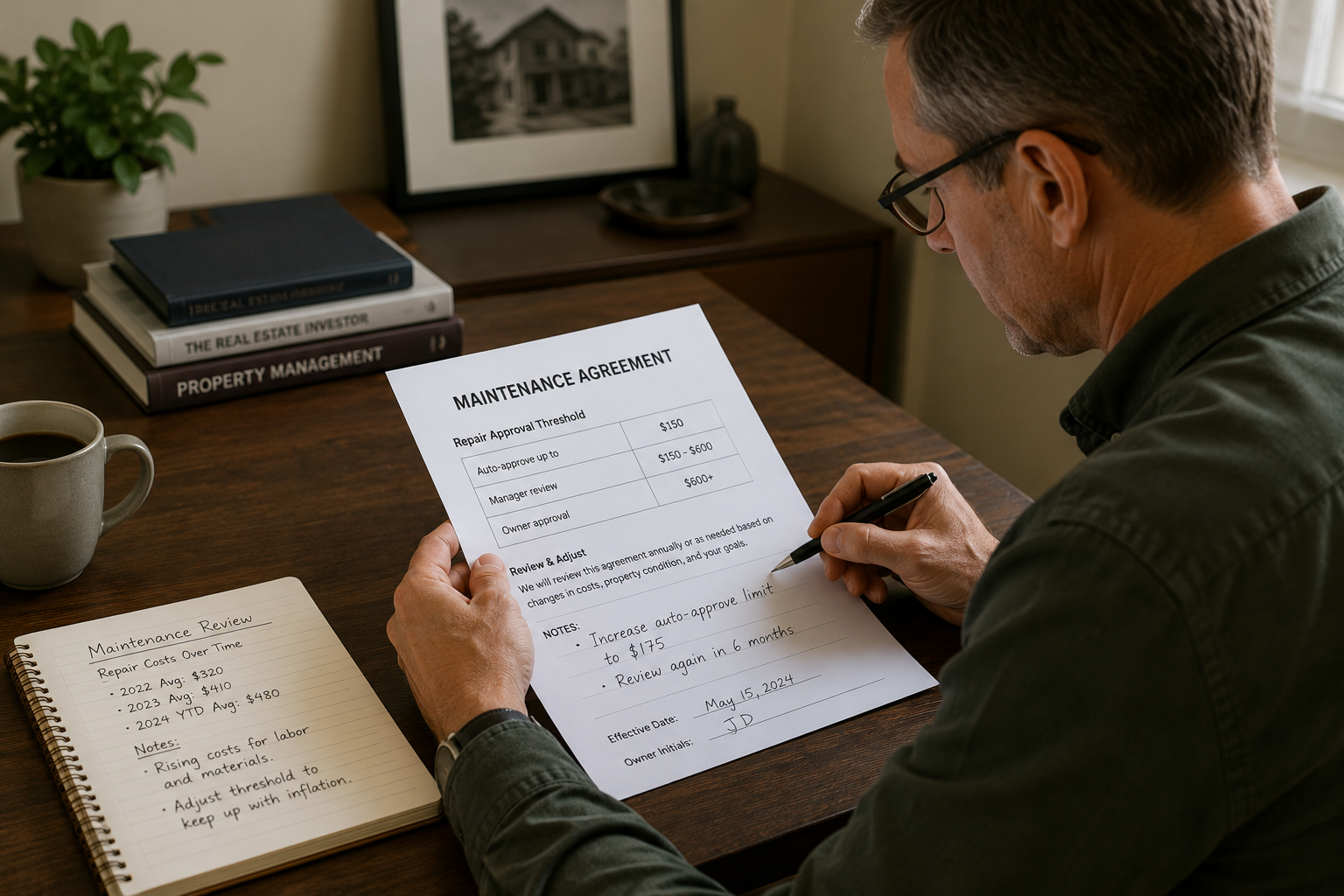
A repair approval threshold is the dollar amount a property manager can spend on a repair without contacting the owner first, typically set between $300 and $500 for most single-family and small multifamily rentals. Setting it too low means constant phone calls for minor repairs and slower response times. Setting it too high risks unexpected costs landing on your statement with no advance warning.
Every management relationship needs a number, and most owners never think carefully about what that number should be. Set no threshold at all, and every repair, down to a $75 garbage disposal fix, waits for your explicit sign-off, which slows everything down and defeats part of the reason you hired help in the first place. Set the threshold too high with no real thought behind it, and you might discover a $1,200 repair on your monthly statement that you never got a chance to weigh in on.
The right number isn’t universal. It depends on your risk tolerance, how many properties you own, and how quickly you want small issues resolved versus how much control you want over every dollar spent. But there’s a range most owners land in, and understanding why helps you pick a number that actually fits your situation instead of guessing.
Why the Threshold Exists in the First Place
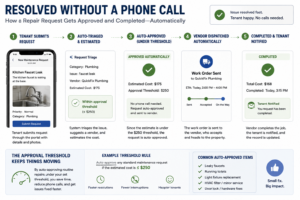
The threshold exists to solve a specific tension: speed versus control. Without one, every repair, no matter how small, requires a phone call and a wait for a response, which can add real days to a repair timeline, days that matter more than they sound like they should when a tenant is dealing with a broken appliance or a slow leak.
Most owners commonly delegate authority to spend up to a certain amount before requiring further approval, precisely because a property manager who has to call for every decision isn’t actually saving the owner meaningful time. The threshold is what lets a manager act immediately on the routine stuff while still protecting the owner’s say on anything significant.
Where Most Owners Land, and Why
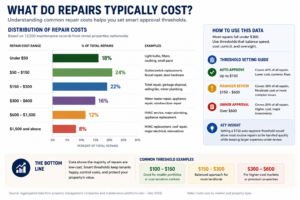
Most owners set their threshold somewhere between $300 and $500. That range covers the overwhelming majority of routine repairs, a garbage disposal, a leaking faucet, a minor appliance fix, without requiring a call, while still catching anything more significant before money gets spent. Research uses the example of a $600 repair against a $500 threshold, illustrating how the number is meant to catch exactly the repairs that owners would actually want a say in, not the routine ones underneath it.
Owner risk tolerance shifts this number meaningfully. Owners who want tighter control, often newer landlords or those managing their first rental, tend to set the threshold lower, sometimes $200 to $250, accepting slightly slower resolution on more repairs in exchange for more visibility. Owners with larger portfolios or more experience often set it higher, $500 to $750, trusting the process more and prioritizing speed across a larger number of doors where a phone call for every property adds up fast.
The threshold isn’t really about the dollar amount. It’s about how much you trust the process versus how much you want to personally weigh in on every decision, and that’s a judgment call only you can make.
What True Emergencies Change About the Threshold
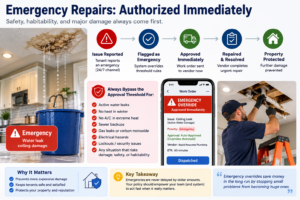
Genuine emergencies, active flooding, a gas leak, no heat in freezing temperatures, should bypass the threshold entirely. Waiting for approval on a burst pipe while water damage spreads defeats the entire purpose of having a management system in place. Research shows that owner-approved work typically gets dispatched within 48 hours, but true emergencies need to move faster than that approval loop allows, which is why most management agreements carve out an explicit emergency exception that authorizes immediate action regardless of cost, followed by notification to the owner as soon as reasonably possible.
This distinction matters because it protects you from a worse outcome than an unexpected repair bill: a property manager who waits for approval on something that genuinely couldn’t wait, and the damage or liability that results from that delay.
Setting Your Threshold: A Simple Framework
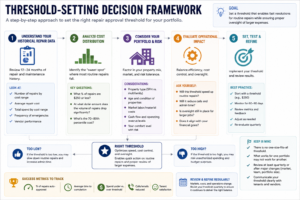
| Your Situation | Suggested Threshold Range | Why |
|---|---|---|
| New landlord, first rental, wants high visibility | $200-$300 | Prioritizes control and learning the process over speed |
| Typical single-family or small multifamily owner | $300-$500 | Balances routine repair speed with meaningful oversight |
| Experienced owner, larger portfolio | $500-$750 | Prioritizes speed and trusts an established management process |
| Any owner, true emergencies | No limit, immediate action | Safety and property protection override the approval process |
When to Adjust Your Threshold Over Time
Raise your threshold when:
- You’ve built trust in your property manager’s judgment and vendor selection over time
- You’re consistently seeing the same routine repairs get flagged just under your current limit
- Your portfolio has grown and the volume of approval calls has become its own time cost
Lower your threshold when:
- You’re new to a management relationship and still building trust
- You’ve been surprised by a repair cost or vendor choice you wouldn’t have approved
- You want more visibility during a specific period, like right after a tenant turnover
Getting Started: Setting the Right Threshold for Your Portfolio
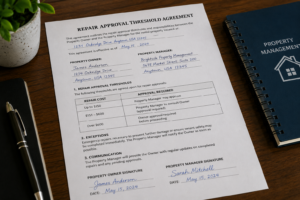
Start in the $300 to $500 range unless you have a specific reason to deviate. This range covers most routine repairs without exposing you to unexpected significant costs.
Confirm your management agreement carves out true emergencies explicitly. The threshold should never delay action on something that genuinely can’t wait.
Revisit the number after your first few months. If you’re getting called about things that feel too minor, raise it. If you’re seeing costs you wish you’d weighed in on, lower it.
Ask how notification works above the threshold. A good process gets you a call or message with the issue and a recommended vendor quote, not just a bill after the fact.
Ready to Set a Threshold That Fits Your Portfolio?
If you’re not sure what threshold makes sense for your specific properties and risk tolerance, that’s a conversation worth having before the first unexpected repair bill forces the decision for you.
Frequently Asked Questions
What is a repair approval threshold?
A repair approval threshold is the dollar amount a property manager can spend on a repair without contacting the owner first for approval. Repairs above that amount require the owner’s sign-off before work proceeds, while repairs at or below it can be handled immediately.
What’s a typical repair approval threshold for a rental property?
Most owners set their threshold between $300 and $500, which covers the majority of routine repairs while still requiring approval for anything more significant. The right number depends on the owner’s risk tolerance and portfolio size.
Do repair approval thresholds apply to emergencies?
No. True emergencies, like active flooding, gas leaks, or no heat in freezing temperatures, should bypass the approval threshold entirely and be addressed immediately, with the owner notified as soon as reasonably possible afterward.
What happens if a repair costs more than my approval threshold?
The property manager should contact you before proceeding, typically with a description of the issue and a recommended vendor quote, so you can approve, request another quote, or discuss alternatives before any money is spent.
Should I raise my repair approval threshold over time?
Many owners raise their threshold as they build trust in their property manager’s judgment and vendor selection, or as their portfolio grows and the time cost of frequent approval calls increases. There’s no fixed timeline, it depends on your comfort level.
Is a lower repair approval threshold always safer?
Not necessarily. A very low threshold means more repairs require a phone call and wait for approval, which can slow down resolution on issues tenants are experiencing as real inconveniences. The safest approach balances reasonable oversight with allowing routine repairs to move quickly.
How Rentwell Helps Owners Make This Shift
This is the exact shift Rentwell builds for owners across Philadelphia and Pittsburgh: leasing systems that fill vacancies on a predictable schedule, a maintenance program that catches issues before they get expensive, and owner reporting that answers the question before it gets asked. Owners get their hours back, and they get them back with a clearer picture of how each property is actually performing.
If self-managing is starting to feel like a second job instead of an investment, a second set of eyes on the setup costs nothing.
Rentwell is a full-service property management company serving Philadelphia, Pittsburgh, West Chester, and the surrounding Pennsylvania communities. With offices in Clifton Heights, Pittsburgh, and West Chester, Rentwell helps real estate investors protect their assets, reduce operational stress, and build long-term wealth through professional property management.