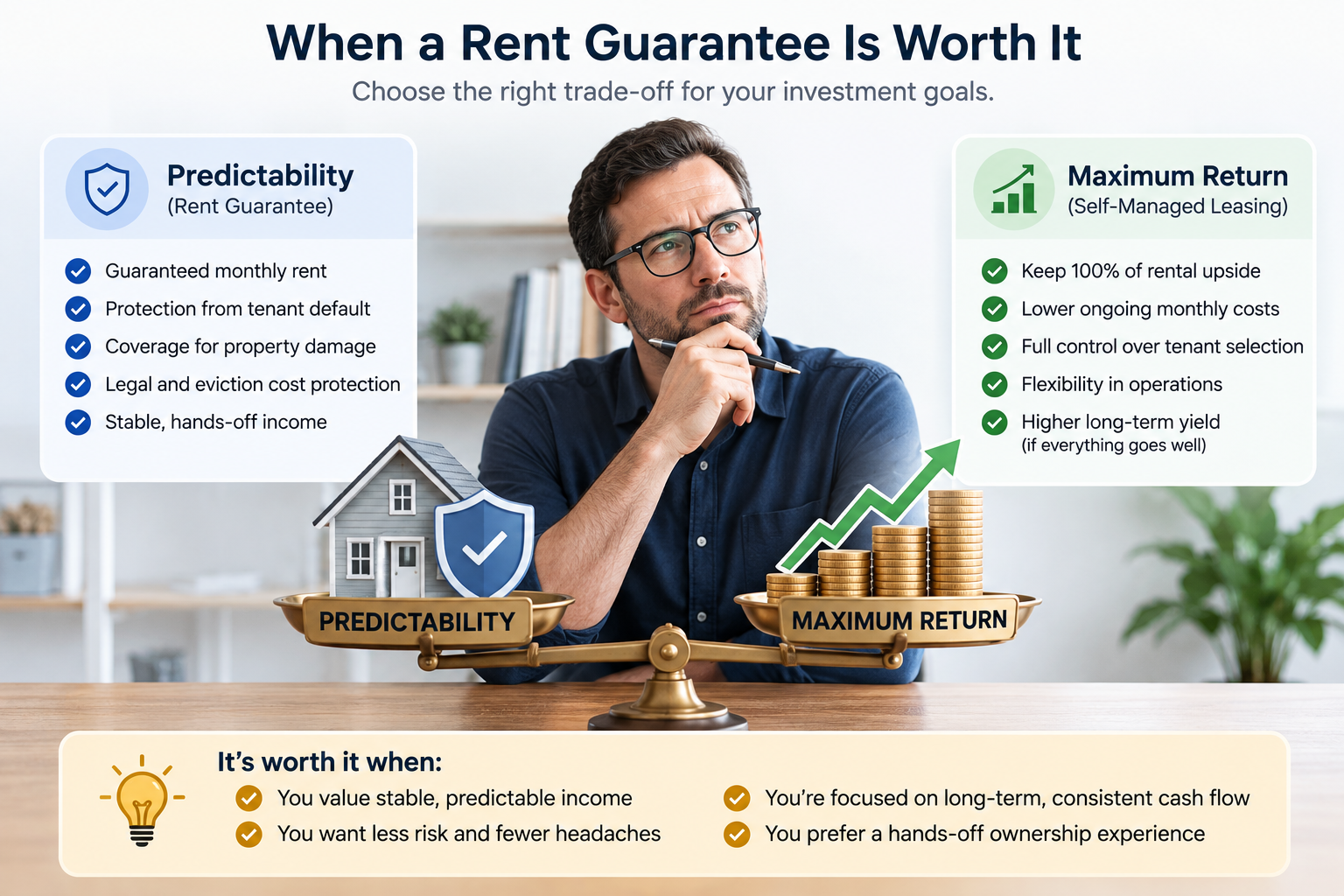
A rent guarantee protects a landlord’s monthly income if a tenant stops paying, typically in exchange for a fee of 3 to 5% of monthly rent or a modest rent discount. It’s most valuable for owners who prioritize predictable cash flow over maximum returns, and least necessary for owners already working with strong tenant screening and a healthy vacancy reserve.
Guaranteed rent sounds like exactly what it promises, certainty. No more wondering whether this month’s deposit will show up. No more scrambling if a tenant loses their job or breaks a lease early. For a lot of owners, especially ones managing a rental from a distance or juggling it alongside a full-time job, that peace of mind is genuinely worth paying for.
It’s also worth understanding what you’re actually buying before you sign up. Not every rent guarantee program works the same way, and the fine print, what counts as a covered event, how fast you’re actually paid, what the program requires from you in exchange, varies enough between providers that “guaranteed rent” can mean meaningfully different things depending on who’s offering it.
What a Rent Guarantee Actually Covers
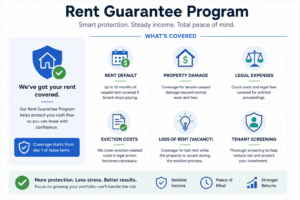
At its core, a rent guarantee ensures you receive your expected rent payment even if the tenant doesn’t pay, or pays late. Coverage details vary by provider. Some programs cover just the missed rent itself, while others bundle in eviction legal costs, property damage protection, and re-tenanting support if a tenant needs to be replaced.
That bundling matters more than it might seem. A program that only covers missed rent still leaves you exposed to the cost of an eviction process, which can run into thousands of dollars in legal and court fees on top of the lost income. A program bundled with eviction cost coverage and damage protection is solving a bigger problem than the name “rent guarantee” alone suggests.
The Real Cost, Beyond the Headline Fee
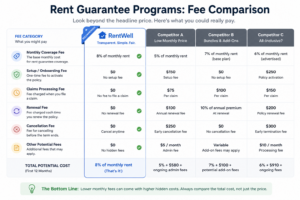
The advertised fee is rarely the whole story. Some providers charge a modest monthly percentage but add onboarding fees, delayed payment processing, or requirements that shift more control away from the owner, like limiting who can select tenants or approve maintenance. At least one major program advertises a low monthly fee while obscuring a four-figure onboarding cost and processing rent payments later in the month than owners typically expect.
A guarantee is only as good as what happens the one time you actually need to use it. That’s the part worth reading closely before you sign anything.
This is also where screening quality changes the math. A company found that strong tenant screening and accurate pricing meant the guarantee benefited owners in under 2% of cases, leading them to redirect that value into lower fees and more owner control instead. That’s a useful data point: the better your screening and leasing process already is, the less a guarantee is likely to actually pay out, which changes whether the ongoing fee is worth it for your specific portfolio.
When a Rent Guarantee Is Worth the Cost

A rent guarantee tends to make sense when:
- You’re an out-of-state or otherwise remote owner who can’t easily absorb a surprise gap in income
- Predictable monthly cash flow matters more to you than optimizing for the highest possible return
- You’d rather pay a known, fixed cost than carry the risk of an unpredictable one
It’s less necessary when:
- Your property is already professionally screened and managed, with a track record of low delinquency
- You maintain a healthy reserve fund that can absorb an occasional missed payment without financial strain
- The specific program’s terms limit your control over tenant selection or maintenance decisions in ways that don’t fit how you want to operate
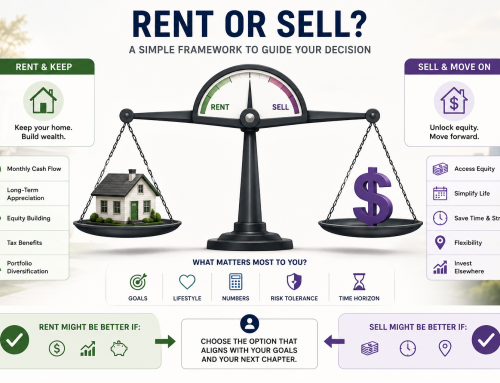
Neither of these lists is about whether a guarantee is a “scam” or not. It’s about whether the certainty it provides is worth more to you than the cost, given how well your existing screening and reserves already manage that same risk.
Rent Guarantee vs. Traditional Landlord Insurance
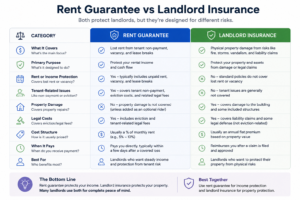
| Factor | Rent Guarantee | Landlord Insurance |
|---|---|---|
| Covers missed or late rent | Yes, this is the core coverage | No, unless a specific rider is added |
| Covers property damage | Sometimes, varies by provider | Yes, typically core coverage |
| Covers eviction legal costs | Sometimes, varies by provider | Rarely without a specific rider |
| Ongoing cost | Typically 3-5% of monthly rent, or a rent discount | Annual premium, generally lower relative cost |
| Requires specific screening standards | Often, to qualify tenants for coverage | No |
| Best paired with | Strong screening, as a supplemental layer | Every rental property, regardless of guarantee status |
The two aren’t substitutes for each other. Landlord insurance protects the physical asset. A rent guarantee protects the income stream. Most well-protected owners carry both, not one instead of the other.
Getting Started: Evaluating a Rent Guarantee Offer
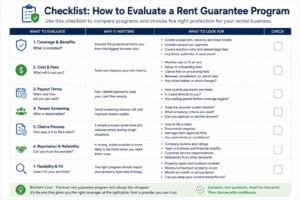
Ask exactly what triggers a payout, and how fast it arrives. A guarantee that pays out slowly, or only under narrow conditions, is worth far less than the name suggests.
Read the fee structure completely, including onboarding and processing terms. The advertised percentage is rarely the full cost.
Ask what control you give up in exchange. Some programs require the provider to approve tenant selection or maintenance decisions, which may or may not fit how hands-on you want to stay.
Compare the fee against your actual delinquency history. If your screening is strong and you’ve had few or no missed payments, the ongoing cost may outweigh the risk it’s covering.
Ready to See How Owner Protections Fit Your Portfolio?
If you’re weighing whether a rent guarantee makes sense for your properties, it’s worth understanding how it compares to the income protections already built into professional management before adding another layer of cost.
Frequently Asked Questions
What does a rent guarantee actually cover?
Coverage varies by provider, but at minimum a rent guarantee covers missed or late rent payments. Some programs bundle in eviction legal costs and property damage protection, while others cover only the rent itself, so it’s worth confirming exactly what’s included before signing up.
How much does a rent guarantee typically cost?
Most rent guarantee programs charge a fee of roughly 3 to 5% of monthly rent, or require the landlord to accept a modest rent discount in exchange for the coverage. Some providers also charge onboarding fees that aren’t always advertised upfront.
Is a rent guarantee the same as landlord insurance?
No. Landlord insurance typically covers property damage and liability, not missed rent. A rent guarantee specifically protects income if a tenant stops paying. Most well-protected owners carry both rather than treating one as a substitute for the other.
Do I still need a rent guarantee if I already screen tenants carefully?
Not necessarily. Strong tenant screening and accurate pricing significantly reduce the likelihood of a missed payment, which some rent guarantee providers have found lowers actual usage rates to under 2% of cases. Whether the ongoing fee is worth it depends on your own delinquency history and risk tolerance.
What should I check before signing up for a rent guarantee program?
Confirm exactly what triggers a payout, how quickly you’re paid, the complete fee structure including any onboarding costs, and whether the program requires giving up control over tenant selection or maintenance decisions.
Are rent guarantees only useful for out-of-state landlords?
They’re often most valuable for remote or otherwise less hands-on owners who can’t easily absorb a surprise income gap, but any owner who values predictable cash flow over maximizing returns may find the tradeoff worthwhile, regardless of location.
How Rentwell Helps Owners Make This Shift
This is the exact shift Rentwell builds for owners across Philadelphia and Pittsburgh: leasing systems that fill vacancies on a predictable schedule, a maintenance program that catches issues before they get expensive, and owner reporting that answers the question before it gets asked. Owners get their hours back, and they get them back with a clearer picture of how each property is actually performing.
If self-managing is starting to feel like a second job instead of an investment, a second set of eyes on the setup costs nothing.
Rentwell is a full-service property management company serving Philadelphia, Pittsburgh, West Chester, and the surrounding Pennsylvania communities. With offices in Clifton Heights, Pittsburgh, and West Chester, Rentwell helps real estate investors protect their assets, reduce operational stress, and build long-term wealth through professional property management.