Reducing vacancy without lowering your standards means fixing the leasing funnel, pricing, photos, response speed, and showing availability, rather than loosening tenant screening criteria to fill a door faster. The national median time-to-lease reached 41 days in early 2026, the slowest reading since 2019, which means speed has to come from process, not from accepting a weaker applicant.
The instinct when a unit sits empty is to start negotiating with yourself. Drop the rent a little. Ease up on the income requirement. Say yes to the first application that clears the bar, even if it’s a low bar. Every one of those moves feels like it’s solving the vacancy problem. Most of the time it’s just trading a vacancy problem for a tenant problem, and tenant problems are more expensive.
The good news is that vacancy and tenant quality aren’t actually in tension the way it feels like they are under pressure. The leasing process has several points where speed can improve without touching screening standards at all. Pricing, presentation, response time, and showing logistics account for most of the delay in a typical vacancy, and none of them require you to accept a weaker applicant.
Price to the Market, Not to Your Last Tenant
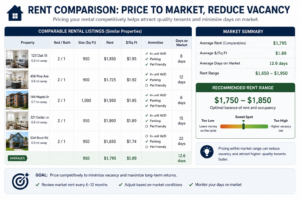
The single biggest driver of extended vacancy is a rent set above what the current market will bear. It’s an easy trap: the last tenant paid $1,850, so the new listing goes up at $1,900 because rents “should” be rising. If comparable units in the neighborhood are actually leasing at $1,800, that $100 gap can add weeks to your time-to-lease, weeks that cost more in lost rent than the higher asking price would ever recover.
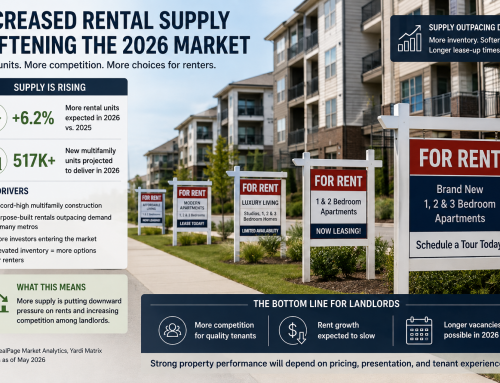
The national multifamily vacancy rate sits at 7.2%, and units are taking an average of 30 days to lease after listing. In a softer market like this one, pricing precisely to comparable listings, not to what you hope the market will bear, is the fastest lever available and doesn’t touch your screening criteria at all.
Fix the Funnel Before You Fix the Price
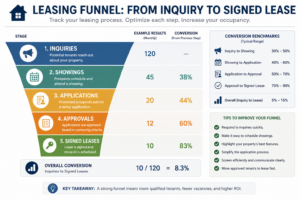
Not every vacancy problem is a pricing problem. Sometimes the listing is generating plenty of inquiries but converting few of them into showings, or plenty of showings but few applications. According to research, converting a lead to a signed lease typically takes 30 to 45 days across marketing channels, and where that time gets lost tells you exactly what to fix.
If inquiries are strong but showings are weak, the friction is usually scheduling, slow response times or limited availability windows. If showings are strong but applications are weak, the issue is often the unit itself, condition, staging, or a price that only becomes a sticking point once someone’s standing in the space. Diagnosing where your specific funnel breaks down matters more than any generic fix, because the solution is different at each stage.
A vacancy that’s actually a scheduling problem doesn’t get fixed by lowering the rent, and a vacancy that’s actually a pricing problem doesn’t get fixed by answering the phone faster.
Respond Like Every Lead Is Time-Sensitive, Because It Is

Speed to respond is one of the highest-leverage, lowest-cost fixes available. A prospective tenant who inquires about your listing is very likely inquiring about several others at the same time. The first company to respond, and to make scheduling a showing easy, wins a disproportionate share of those leads, not because the property is better, but because the process was faster.
This is also where automation earns its keep without touching screening quality at all. An instant acknowledgment, followed by self-scheduled showing options, keeps a lead warm during the hours a landlord might not be available to answer the phone personally. None of that changes who ultimately qualifies for the lease. It just makes sure quality applicants don’t drop out of your funnel before they ever get the chance to apply.
Presentation Does More Work Than Most Owners Expect

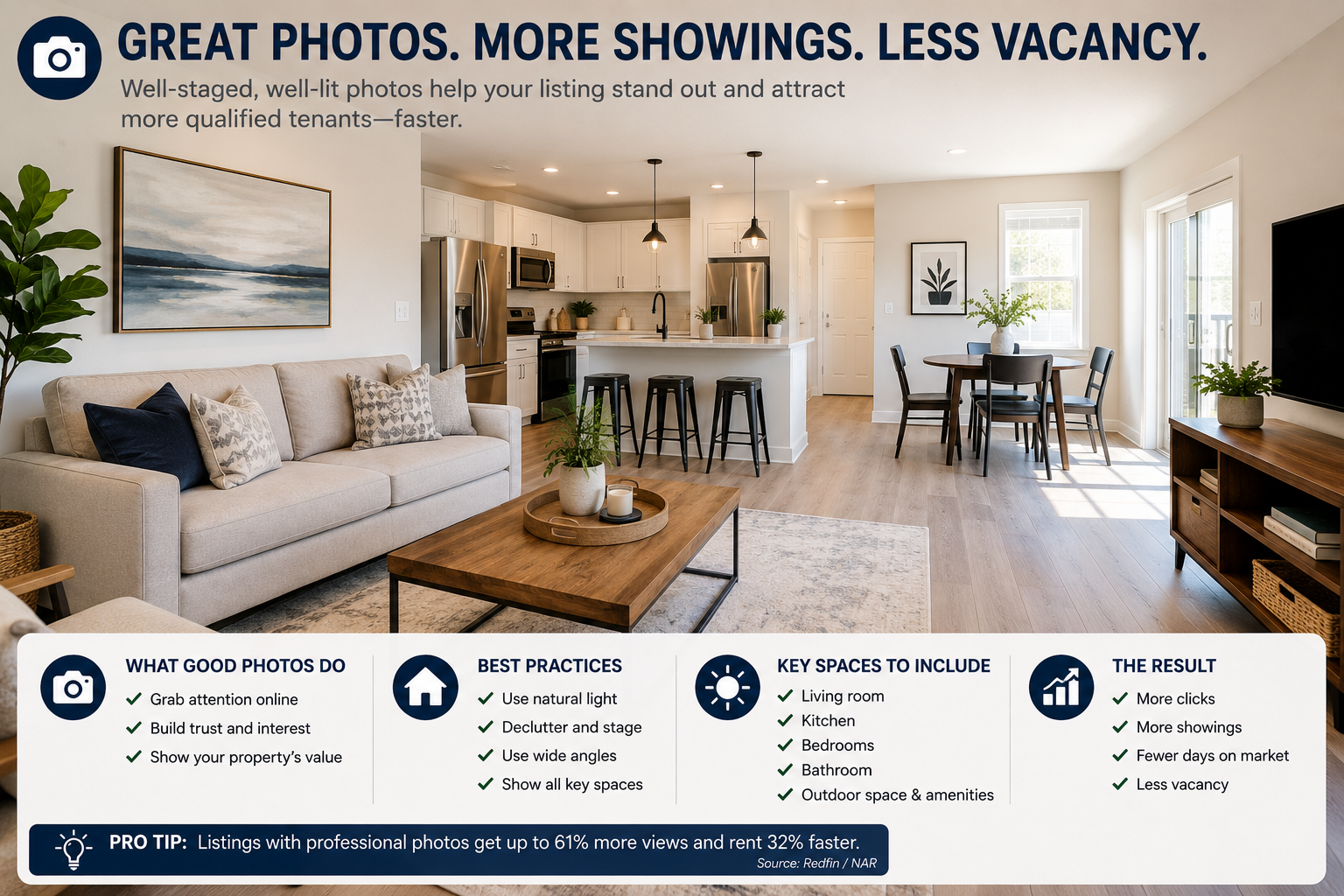
Photos are frequently the weakest link in an otherwise solid listing. Dark, cluttered, or poorly angled photos cost you showings before a prospective tenant ever calls, because most renters filter listings visually before reading a word of the description. A modest investment in professional photos, or even a careful daytime phone-shoot with proper staging, often pays for itself many times over in reduced vacancy.
A clean, briefly staged unit also converts better at the showing stage itself. A prospective tenant standing in an empty, dim unit has to imagine themselves living there. A tenant standing in a unit with basic staging, good lighting, and visible care doesn’t have to imagine as hard, and that gap shows up directly in application rates.
Reduce Vacancy the Right Way vs. the Wrong Way
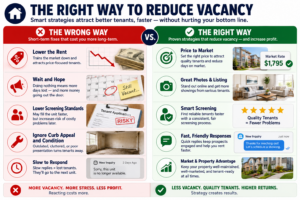
| Approach | What It Does to Time-to-Lease | What It Does to Tenant Quality |
|---|---|---|
| Price to comparable listings | Reduces vacancy meaningfully | No impact |
| Fast, automated first response | Reduces vacancy meaningfully | No impact |
| Professional photos and staging | Reduces vacancy moderately | No impact |
| Flexible self-scheduled showings | Reduces vacancy moderately | No impact |
| Lowering the income requirement | Reduces vacancy short-term | Increases risk significantly |
| Skipping rental history checks | Reduces vacancy short-term | Increases risk significantly |
| Dropping rent below market | Reduces vacancy | Reduces long-term returns |
The top four rows solve the actual problem. The bottom three trade a short-term fix for a longer-term cost.
When to Adjust Price vs. When to Fix Process
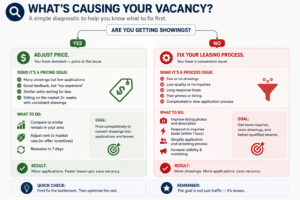
Adjust price when:
- Comparable units are consistently leasing at a lower rate than your listing
- Inquiries are low across multiple weeks, not just slow to convert
- You’ve confirmed the listing itself, photos and description, is strong
Fix process instead when:
- Inquiries are steady but showings or applications are dropping off
- Response time to leads is measured in days rather than hours
- Photos are outdated, dark, or don’t reflect the current condition of the unit
Getting Started: A Vacancy Reduction Checklist
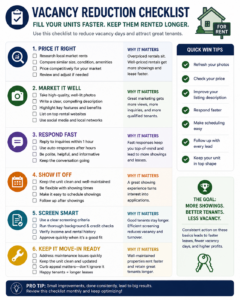
Pull three to five comparable listings before you set a price. Price to what’s actually leasing nearby, not to what you hope the market will pay.
Respond to every inquiry within an hour if possible. Set up an automated acknowledgment at minimum so no lead goes cold while you’re unavailable.
Invest in better photos before you invest in a rent cut. This is usually the cheaper fix and the one most owners skip first.
Offer flexible, self-scheduled showing times. Reducing the friction between inquiry and showing keeps qualified leads from dropping out of your funnel.
Ready to Lease Faster Without Cutting Corners?
If your vacancy is dragging on and you’re not sure whether it’s a pricing problem or a process problem, that diagnosis is worth getting right before you touch your screening standards.
Frequently Asked Questions
How long should a rental property typically stay vacant?
National data from early 2026 shows a median time-to-lease around 41 days, though this varies significantly by market and property type. A unit taking meaningfully longer than comparable local listings usually points to a pricing or presentation issue rather than bad luck.
Should I lower my rent if my property has been vacant for a while?
Only after confirming the price is actually above market for comparable units nearby. If pricing is already competitive, the delay is more likely a process issue, slow response time, weak photos, or limited showing availability, that a rent cut won’t fix.
Does responding faster to rental inquiries actually reduce vacancy?
Yes. Prospective tenants are typically inquiring about multiple listings at once, and the first company to respond and offer an easy path to a showing captures a disproportionate share of qualified leads, independent of the property itself.
Can I reduce vacancy without loosening my tenant screening criteria?
Yes. Pricing accuracy, response speed, listing presentation, and showing flexibility all reduce vacancy without touching screening standards. Loosening income or credit requirements trades a short-term vacancy fix for a longer-term tenant risk.
What’s the biggest mistake landlords make when trying to fill a vacancy fast?
Assuming every vacancy is a pricing problem. Many vacancies are actually funnel problems, slow response time, weak photos, or limited showing windows, that a rent reduction won’t solve and that cost money to fix incorrectly.
How often should I check comparable rental prices in my market?
Check comparable listings before every new vacancy, not just once when you first bought the property. Rental markets shift, and pricing based on outdated comparables is one of the most common causes of extended vacancy.
Rentwell is a full-service property management company serving Philadelphia, Pittsburgh, West Chester, and the surrounding Pennsylvania communities. With offices in Clifton Heights, Pittsburgh, and West Chester, Rentwell helps real estate investors protect their assets, reduce operational stress, and build long-term wealth through professional property management.