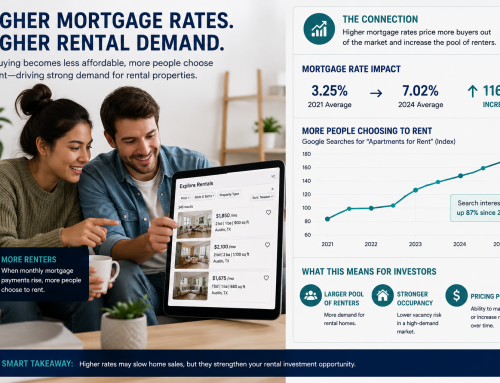
Property management creates wealth by protecting three things that quietly determine returns: rent that actually gets collected on time, time the owner can reinvest into growing the portfolio, and an asset that holds its value because it’s maintained instead of neglected. It’s not about doing less. It’s about a system doing the work that used to drain the owner.
Most owners get into real estate to build something, not to take on a second job answering maintenance calls at 9 p.m. But that’s exactly what happens to a lot of self-managed portfolios. The work expands quietly until the owner who bought a rental for freedom is running it like an unpaid shift job, and the wealth they were supposed to be building slows down because of the hours it costs to maintain it.
This is for the owner with one property who’s starting to feel that creep, and for the investor with five or ten doors who already knows self-managing doesn’t scale. Here’s the actual mechanism behind how professional management turns operations into wealth, not just convenience.
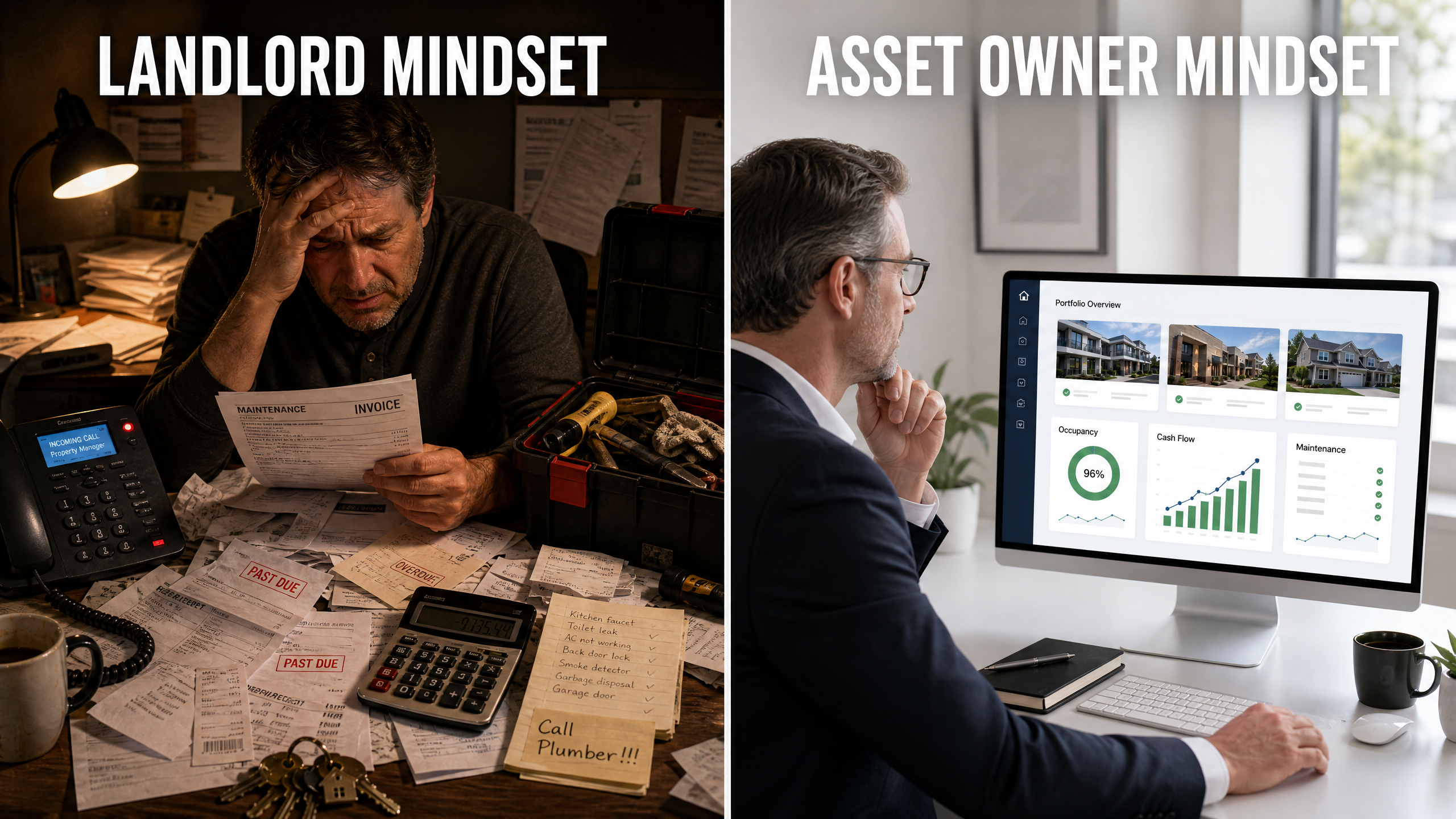
The Mindset Shift From “Landlord” to “Asset Owner”
A landlord manages a property. An asset owner manages a portfolio. The distinction sounds small, but it changes almost every decision: which repairs get prioritized, how rent gets set, whether to buy the next property at all.
When an owner is the one fielding every call and chasing every late payment, decisions get made reactively, around whatever fire is burning that week. When a professional team handles operations, the owner gets to step back and think like an investor: which property is underperforming, where the next opportunity is, whether it’s time to refinance or sell. That shift in attention, from daily tasks to portfolio strategy, is where the wealth-building actually starts.
You can’t think like an investor while you’re working like a maintenance technician. The two roles compete for the same hours.
How Stable Operations Creates Freedom
Freedom in real estate doesn’t come from owning more doors. It comes from each door requiring less of the owner’s direct attention to run well.
According to landlord statistics, 43.8% of landlord-managed properties take the owner less than 4 hours a month, but that number climbs fast once something goes wrong: a vacancy, a maintenance emergency, an eviction. Those hours are rarely predictable, and they tend to land at the worst possible time. A property with strong systems behind it, leasing workflows, vendor relationships, documented processes, doesn’t eliminate those events. It absorbs them without requiring the owner to drop everything.
That’s the real freedom: not zero involvement, but a portfolio that runs without the owner being on call. Three things tend to drive that stability most:
- Leasing systems that fill vacancies on a predictable timeline instead of an unpredictable one
- Maintenance workflows that catch small issues before they become expensive ones
- Reporting that tells the owner what’s happening without them having to ask
Building a Portfolio That Doesn’t Own You
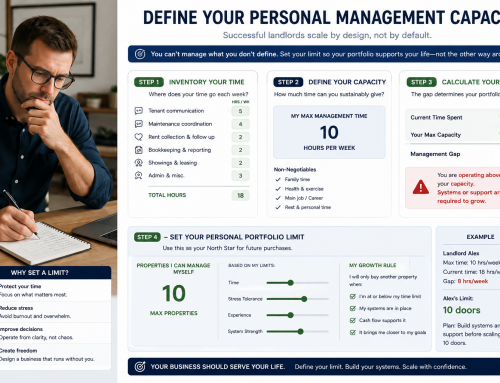
Most owners who try to scale past two or three properties while self-managing hit the same wall. The math works on paper, but the hours don’t exist. Each new property adds tenant calls, lease renewals, and maintenance coordination on top of what’s already there, and at some point the portfolio stops growing because the owner has run out of capacity, not capital.
This capacity wall is well documented. Owners who value their own time honestly and run the math on hours spent per door tend to find the same pattern: a few dozen hours a year at a professional’s hourly rate adds up to real money, often more than the management fee itself, according to cost analysis comparing self-management against professional management on a per-door basis. The hours don’t disappear when a portfolio grows. They just get absorbed by someone, either the owner or a team built to handle them.
A comparison guide on landlords versus property managers lays out a conservative example: on a $2,500-a-month rental, professional management that reduces vacancy time, optimizes rent, and secures vendor discounts can put real money back in the owner’s pocket even after the management fee, not just break even on it. That’s the difference between a fee being an expense and a fee being a multiplier. Once that math works, adding the next property doesn’t add a second job. It adds another asset to a system that already runs.
A Simple Example: Two Owners, Same Number of Doors

Two owners each have four rental properties. One self-manages and spends most weekends handling a maintenance call, screening an applicant, or chasing a late payment, on top of a full-time job. The other works with a property manager and spends maybe an hour a month reviewing reports and deciding whether to approve a larger repair.
Both might show similar income on paper. But one owner has the time and mental space to evaluate a fifth property when it comes up. The other doesn’t, because they’re already at capacity. Five years later, the gap between those two owners isn’t just about hours saved. It’s about which one actually had room to keep building.
When the Shift From Landlord to Asset Owner Actually Makes Sense
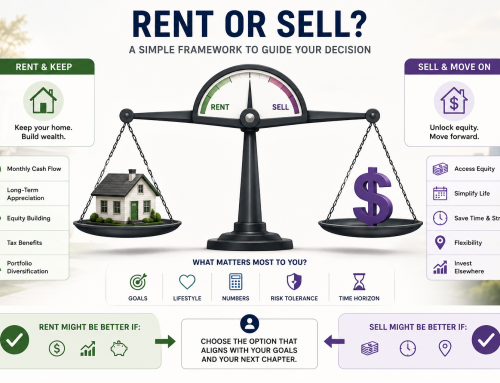
Self-managing still works when:
- You own one property, live nearby, and genuinely have the hours to spare each month
- You have a trusted, local vendor already lined up for repairs
- You want full control over every decision, from rent price to tenant selection
It’s time to bring in professional management when:
- You’re adding a second, third, or fourth property and feeling the hours compound
- A vacancy, eviction, or emergency repair has already cost more than a management fee would have
- You want the next property to be a decision, not a scramble for spare hours
The wall usually shows up quietly, one late-night call too many, one missed rent increase, one weekend that was supposed to be for family instead of a tenant showing. That’s the signal, not a specific door count.
Ready to Build Operations That Build Wealth?
The shift from landlord to asset owner doesn’t happen by working harder. It happens by putting a system in place that runs the property so the owner can run the portfolio.
If maintenance is the part of self-managing that’s draining the most time right now, the rental property maintenance tips post breaks down where that time usually goes and how to get it back.
Frequently Asked Questions
Does hiring a property manager actually pay for itself?
For many owners, yes. Reduced vacancy time, optimized rent pricing, and vendor discounts can offset the management fee and add to net income, not just cover the cost of the service.
How does property management create wealth if the owner is paying a fee?
The fee buys back time and reduces risk, both of which protect returns. An owner who isn’t spending weekends on maintenance calls has more capacity to grow the portfolio, and an owner with fewer compliance mistakes avoids costly legal exposure.
How many hours do most landlords spend managing their properties?
Around 43.8% of landlord-managed properties take the owner less than 4 hours a month under normal conditions, though that number rises significantly during vacancies, maintenance emergencies, or tenant disputes.
Is property management worth it for just one rental property?
It depends on the owner’s time, location relative to the property, and comfort with legal and financial risk. Owners with multiple properties or limited time nearby tend to see the clearest return.
What’s the difference between a “landlord” mindset and an “asset owner” mindset?
A landlord mindset focuses on the day-to-day tasks of running a property. An asset owner mindset focuses on portfolio-level decisions, like when to refinance, when to buy, and which property is underperforming, which requires stepping back from daily operations.
Can professional management help a portfolio scale faster?
Yes. Without systems in place, most self-managing owners hit a capacity wall around two or three properties. Professional management removes that ceiling by handling the operational load that would otherwise eat into the owner’s time.
How Rentwell Helps Owners Make This Shift
This is the exact shift Rentwell builds for owners across Philadelphia and Pittsburgh: leasing systems that fill vacancies on a predictable schedule, a maintenance program that catches issues before they get expensive, and owner reporting that answers the question before it gets asked. Owners get their hours back, and they get them back with a clearer picture of how each property is actually performing.
If self-managing is starting to feel like a second job instead of an investment, a second set of eyes on the setup costs nothing.
Rentwell is a full-service property management company serving Philadelphia, Pittsburgh, West Chester, and the surrounding Pennsylvania communities. With offices in Clifton Heights, Pittsburgh, and West Chester, Rentwell helps real estate investors protect their assets, reduce operational stress, and build long-term wealth through professional property management.