Most landlords don’t lose money on the maintenance emergency itself. They lose it in the six months before it, when a small warning sign got ignored because nobody had a system for catching it.
A water heater doesn’t fail on a Tuesday for no reason. It’s been making a sound for three weeks, and nobody who owns the property heard it, because nobody was looking. That’s the pattern behind almost every “surprise” repair bill. It wasn’t a surprise. It was a missed checkup, a deferred inspection, or a tenant complaint that sat in a voicemail too long.
For owners who self-manage, or who work with a property manager that treats maintenance as something to react to instead of plan around, this is where the money actually leaks out. Not in one dramatic failure, but in a dozen small ones that compound month after month. Here’s how to build a system that catches problems early, tells the difference between a real emergency and a Tuesday-morning fix, and keeps the budget from turning into a guessing game.
A Preventive Maintenance Schedule Worth Following
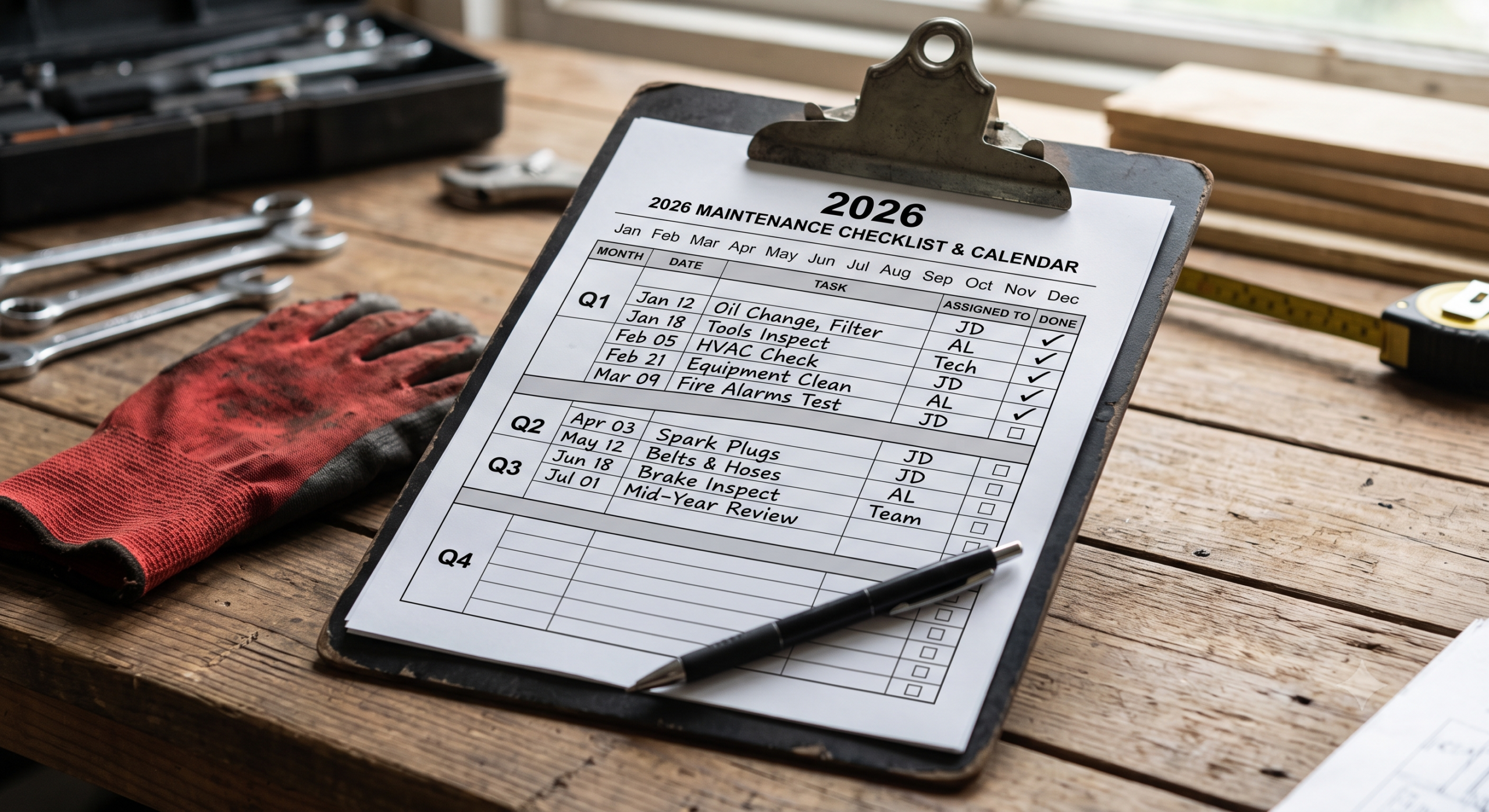
Preventive maintenance is the unglamorous work that happens before anything breaks: HVAC filter changes, gutter clearing, water heater flushes, smoke detector testing, and seasonal inspections of roofing and exterior drainage. None of it is exciting. All of it is cheaper than the alternative.
The data backs this up directly. According to Buildium’s 2026 industry research, 40% of renters who were unsure about renewing their lease said they would stay another year if their property manager invested more in maintaining the property, ahead of amenities or added services. Tenants notice whether a property is cared for, and they make staying-or-leaving decisions based on it.
A reasonable cadence looks like this:
- HVAC filters every 60 to 90 days, water heater flush annually, gutters cleared twice a year
- Full exterior and roof inspection each spring and fall
- Smoke and carbon monoxide detector testing at every turnover and at least once mid-lease
None of these need a specialist on standby. They need someone tracking dates and following through, which is the part that quietly falls apart in self-managed properties when life gets busy.
The properties that avoid expensive surprises aren’t the ones with the biggest repair budgets. They’re the ones with the most boring maintenance calendar.
Emergency vs. Non-Emergency: What Actually Counts
One of the fastest ways an owner loses a tenant’s trust, or overpays for a repair, is misjudging urgency in either direction. A leaking pipe at midnight is not the same as a flickering hallway light, and treating them the same wastes either money or goodwill.
A true emergency threatens safety or causes ongoing property damage if it waits: no heat in freezing weather, no water, active flooding, or a gas smell. These need a same-day or overnight response, full stop.
Everything else, a slow drain, a loose cabinet hinge, a dead lightbulb in a common area, can be scheduled within a normal business window. The mistake owners make is either ignoring real emergencies because they came in after hours, or paying emergency-rate vendor fees for something that could have waited until Monday. Buildium’s maintenance research found that properties with maintenance response times over five days see non-renewal rates climb sharply compared to properties that respond quickly, so speed matters even on the non-emergency requests. The fix isn’t treating everything as urgent. It’s having a clear definition of urgent, and a tenant-facing process that sets that expectation up front.
Why Maintenance Gets Expensive (And How to Reduce It)
Maintenance costs balloon for a few predictable reasons, and almost none of them are about the repair itself. They’re about timing and documentation.
A repair deferred for three months almost always costs more than the same repair handled in week one, because small leaks become rotted subfloor and small electrical issues become rewiring jobs. Vendor relationships matter just as much. An owner calling around for a same-day plumber pays whatever that plumber wants to charge. A property manager with an established vendor network gets priority scheduling and negotiated rates, because the vendor knows the work is steady. And documentation, photos, dates, communication logs, is what separates a clean insurance claim from a denied one when something does go seriously wrong.
Buildium’s research found that 56% of rental owners who hire a property manager do it specifically for expert help with maintenance, ahead of nearly every other reason except distance from the property. That’s not a coincidence. It’s owners recognizing that the system around maintenance, not just who shows up with a wrench, is what controls the cost.
A Case Lesson: How One Maintenance Issue Got Handled the Right Way
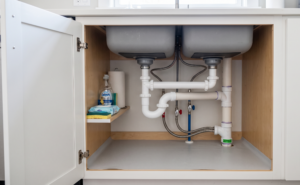
A tenant reported a slow leak under a kitchen sink on a Thursday afternoon. It wasn’t an emergency, no flooding, no safety risk, but it was flagged as a priority because slow leaks left alone become cabinet rot and mold remediation bills. A vendor was scheduled for Friday morning, the part was already on hand because the issue had been diagnosed over the phone first, and the repair was finished before the weekend for a few hundred dollars.
Left for two more weeks, that same leak would likely have soaked into the particleboard cabinetry and required a full under-sink rebuild, plus a mold inspection if it sat long enough. The difference between a $300 fix and a $3,000 one wasn’t luck. It was a system that took a non-emergency report seriously instead of letting it sit in a queue.
When to Call a Vendor Yourself vs. When to Let a Property Manager Handle It
Call a vendor yourself when:
- You own one property and already have a trusted, local contractor on speed dial
- The issue is minor and non-urgent, like a squeaky door or a loose fixture
- You have the time to be reachable during business hours for scheduling and follow-up
Most self-managing owners can handle this level of maintenance fine, right up until two requests land in the same week.
Let a property manager handle it when:
- You own more than one property, or you don’t live near the one you own
- You want negotiated vendor rates instead of retail, same-day pricing
- You need documentation for insurance, tax records, or owner reporting
A single emergency at 11 p.m. is where the difference usually shows up first. Owners without a vendor network end up calling whoever answers the phone, and paying whatever that person asks.
Building a Maintenance System That Runs Itself: A Few Things Worth Knowing
Getting from reactive to preventive doesn’t require a specialist. It requires a system that doesn’t rely on memory.
Put dates on a calendar, not in your head. HVAC filters, gutter clearing, water heater flushes, and detector testing all need a recurring reminder. If it’s not scheduled, it gets forgotten during a busy month.
Build a short list of vetted vendors before you need one. Waiting until a pipe bursts to find a plumber means paying premium, same-day rates to whoever picks up. A pre-vetted list, even a short one, changes that math.
Document everything, even the small stuff. A photo and a date on a minor repair today is the evidence that protects an insurance claim or a security deposit dispute later.
Set tenant expectations early. A move-in packet that defines what counts as an emergency, and how to report anything else, prevents both the ignored gas smell and the 2 a.m. call about a dead lightbulb.
Ready to Stop Guessing at Your Maintenance Budget?
A maintenance plan only works if someone is actually running it: tracking dates, vetting vendors, and triaging requests correctly the first time. If your current approach is closer to “wait and see what breaks,” it’s worth a second set of eyes on the setup.
[INTERNAL: full-service property management overview — “see what a full-service property manager handles” →]
If vacancy is also eating into returns alongside maintenance costs, the vacancy reduction strategy guide covers the screening and leasing side of the same problem.
How Rentwell Handles Maintenance for Philadelphia and Pittsburgh Owners
This is exactly the system Rentwell runs for owners across Philadelphia and Pittsburgh: a preventive schedule that doesn’t depend on anyone remembering a date, a vetted vendor network that gets priority scheduling instead of emergency rates, and documentation on every request from the first phone call to the final invoice. Owners get a clear line between what’s urgent and what can wait, and a report showing exactly what was done and why.
If your current setup is closer to “wait and see what breaks,” a second set of eyes on it costs nothing.
Frequently Asked Questions
How often should a rental property get a maintenance inspection?
A full interior and exterior inspection twice a year, in spring and fall, catches most seasonal issues before they become expensive. HVAC filters need attention every 60 to 90 days, and water heaters benefit from an annual flush.
What counts as an emergency maintenance request?
Anything that threatens safety or causes ongoing damage if it waits: no heat in cold weather, no water, active flooding, or a gas smell. Everything else can typically be scheduled within normal business hours.
Does preventive maintenance actually reduce costs, or is it just an added expense?
It reduces costs. A repair caught early is almost always cheaper than the same issue after it’s been left to worsen, and tenants who see a well-maintained property are more likely to renew, which avoids turnover costs entirely.
Why do property managers handle maintenance differently than self-managing owners?
Property managers typically have established vendor relationships, which means faster scheduling and negotiated rates instead of emergency call-out pricing. They also document every request, which matters for insurance claims and dispute resolution.
How much does deferred maintenance typically cost compared to handling it early?
It varies by issue, but the pattern holds broadly. A leak or small repair handled within days often costs a few hundred dollars, while the same issue left for weeks can turn into a multi-thousand-dollar job involving structural or mold remediation.
Should tenants be charged for maintenance issues they report?
Tenants generally shouldn’t be charged for normal wear and reported issues, since penalizing reports discourages tenants from speaking up early, which raises long-term costs. Charges typically only apply to damage caused by tenant negligence.
Rentwell is a full-service property management company serving Philadelphia, Pittsburgh, West Chester, and the surrounding Pennsylvania communities. With offices in Clifton Heights, Pittsburgh, and West Chester, Rentwell helps real estate investors protect their assets, reduce operational stress, and build long-term wealth through professional property management.