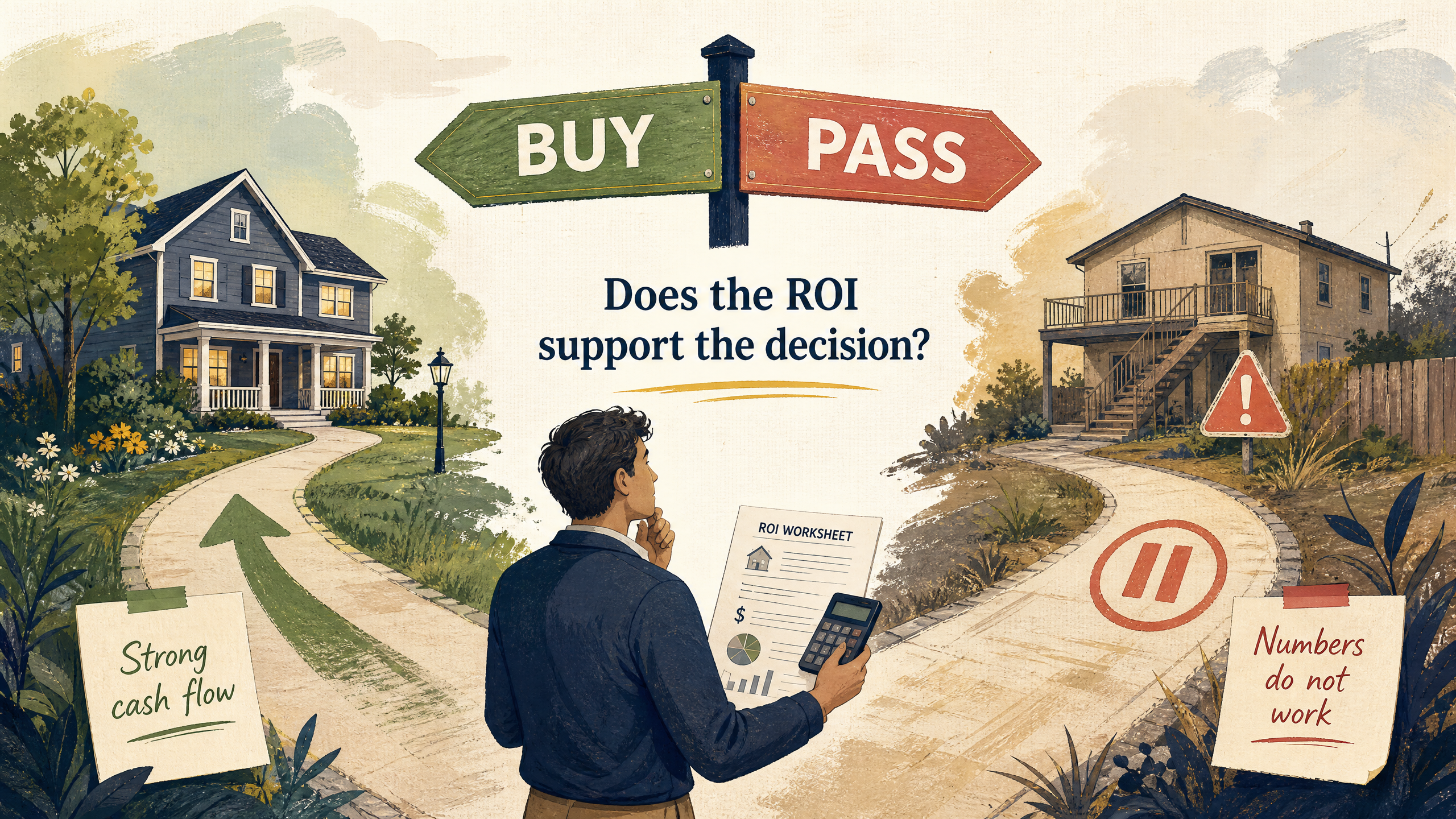
Rental property ROI is best measured with cash-on-cash return: annual cash flow after all expenses, divided by the actual cash you invested. The formula most owners use online only accounts for rent minus mortgage, which ignores vacancy, repairs, capital expenses, and management costs, and routinely overstates real returns by several points.
Every rental property spreadsheet looks great in the pitch. Rent comes in, mortgage goes out, the difference is profit. Then the water heater fails in February, the unit sits empty for five weeks between tenants, and the number on the spreadsheet stops matching the number in the bank account.
That gap isn’t bad luck. It’s a math problem. Most first-time investors build their ROI formula around the two line items they can see clearly, rent and mortgage, and leave out the ones that show up unevenly but add up to real money over a year. Getting the formula right doesn’t just help you evaluate a deal before you buy it. It tells you whether the property you already own is actually performing, or whether it just feels like it is.
The Formula That Actually Holds Up

Cash-on-cash return is the number that matters most for a landlord who’s financing a property, because it measures return against the actual cash you put in, not the full purchase price.
The formula: Annual Cash Flow ÷ Total Cash Invested = Cash-on-Cash Return.
Annual cash flow itself is where most owners lose accuracy. The full version looks like this: Gross rental income, minus vacancy loss, minus operating expenses (taxes, insurance, maintenance, management, utilities if you cover any), minus debt service, equals annual cash flow.
Total cash invested includes your down payment, closing costs, and any upfront rehab or turnover costs, not just the down payment alone. Skip that step and you’ll overstate your return on every deal you run.
Where Owners Get the Numbers Wrong
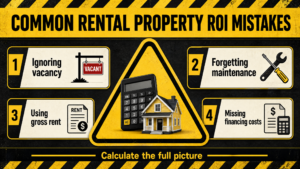
Vacancy gets left out entirely, or badly underestimated. A lot of first-time landlord spreadsheets assume 100% occupancy, every month, forever. That’s not how rental markets work. Units are taking an average of 30 days to lease after listing, and the national multifamily vacancy rate sits at 7.2%. Even a well-run property will have downtime between tenants. Budget 5 to 8% of annual gross rent for vacancy, and adjust upward if your specific market or property type runs slower than that.
Repairs get budgeted as an afterthought instead of a real line item. The rule of thumb worth using is 1% of the property’s value per year for maintenance and repairs, higher for older housing stock, which describes a lot of Philadelphia and Pittsburgh inventory. That’s not the same as capital expenditures, roofs, HVAC replacement, major systems, which deserve their own separate reserve.
Management costs get treated as optional rather than modeled in. Even if you’re self-managing today, model your numbers as though you’re paying 8 to 12% of collected rent for management. That way, if you ever hand the property off, the deal still works. If it only works because you’re doing the labor for free, that’s not really a return, it’s a job you haven’t priced yet.
A rental property’s real return is whatever’s left after vacancy, repairs, and management get their turn, not what’s left after just the mortgage does.
A Worked Example

Take a $220,000 single-family rental in the Philadelphia suburbs, renting for $1,900 a month, with 20% down.
Gross annual rent: $22,800. Vacancy loss at 6%: -$1,368. Property taxes and insurance: -$4,200. Maintenance reserve at 1% of value: -$2,200. Management at 10%: -$2,140 (calculated on collected rent after vacancy). Mortgage payment (principal and interest, 30-year, market rate): -$11,400.
Annual cash flow: $1,492. Total cash invested (down payment plus closing costs and light turnover work): roughly $52,000.
Cash-on-cash return: 2.9%.
That’s a meaningfully different picture than “rent minus mortgage,” which would have shown $11,400 a year in “profit” and a much rosier 22% return. Both numbers describe the same property. Only one of them describes what actually lands in your account.
When the Real Number Changes Your Decision

Run the full formula before you buy when:
- You’re comparing two or more properties and the “obvious” winner on rent alone might not be the winner on real cash flow
- The property is older and likely to carry a higher maintenance percentage than newer stock
- You’re financing with a smaller down payment, since cash-on-cash return is more sensitive to your invested capital than to the purchase price alone
The simplified formula is fine for a first gut-check when:
- You’re doing early-stage screening across a long list of listings and just need to rule properties out
- You already know the market well enough to sanity-check whether a deal is in the right range before running full numbers
Use the quick version to filter. Use the full version before you sign anything
Getting Started: Building Your Own ROI Model
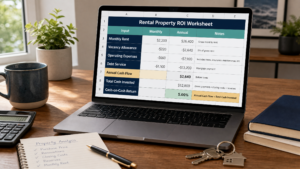
Start with a real vacancy assumption, not zero. Pull local days-on-market data for your specific submarket rather than a national average, since Philadelphia and Pittsburgh neighborhoods vary widely from each other.
Separate maintenance from capital expenditures. Maintenance is the 1% annual reserve for ongoing wear. CapEx is a separate savings line for roofs, HVAC, and major systems, usually modeled as a per-unit monthly set-aside.
Model management costs even if you’re self-managing. This protects you from a deal that only works because your own labor is unpriced.
Re-run the numbers annually. Rents, taxes, and insurance all move. A property that returned 6% two years ago may be returning something different today, and you won’t know without checking.
Ready to See Your Actual Numbers?
If you want a second set of eyes on whether a property you own, or one you’re considering, holds up once vacancy, repairs, and management are built into the math, that’s a conversation worth having before the numbers surprise you.
Frequently Asked Questions
What is a good ROI for a rental property?
Cash-on-cash returns between 6% and 10% are generally considered solid for a financed single-family or small multifamily rental, though the right target depends on your market, financing terms, and risk tolerance. Properties in higher-cost metro areas often run lower on cash-on-cash return but higher on appreciation potential.
What’s the difference between cap rate and cash-on-cash return?
Cap rate measures a property’s return as if purchased entirely in cash, ignoring financing. Cash-on-cash return measures your actual return on the cash you invested, factoring in your mortgage. For financed properties, cash-on-cash return is the more useful number for most owners.
How much should I budget for rental property maintenance?
A common rule of thumb is 1% of the property’s value per year for ongoing maintenance, separate from a capital expenditure reserve for major systems like roofs and HVAC. Older properties, common in Philadelphia and Pittsburgh, often run higher than 1%.
Should I include property management fees in my ROI calculation even if I’m self-managing?
Yes. Modeling an 8 to 12% management cost into your numbers, even while self-managing, shows you whether the deal still works if you ever want to hand off the work. If it only works because your own time is unpriced, the real return is lower than it appears.
How much vacancy should I assume when calculating rental ROI?
Most owners should budget 5 to 8% of annual gross rent for vacancy, adjusted based on local days-on-market data for your specific submarket. National averages currently show units taking about 30 days to lease after listing.
Does rental property ROI include appreciation?
The cash-on-cash return formula measures cash flow only, not appreciation. Total return, which factors in equity growth, tax benefits, and appreciation alongside cash flow, gives a fuller picture but requires separate assumptions about future market performance.
How Rentwell Helps Owners Make This Shift
This is the exact shift Rentwell builds for owners across Philadelphia and Pittsburgh: leasing systems that fill vacancies on a predictable schedule, a maintenance program that catches issues before they get expensive, and owner reporting that answers the question before it gets asked. Owners get their hours back, and they get them back with a clearer picture of how each property is actually performing.
If self-managing is starting to feel like a second job instead of an investment, a second set of eyes on the setup costs nothing.
Rentwell is a full-service property management company serving Philadelphia, Pittsburgh, West Chester, and the surrounding Pennsylvania communities. With offices in Clifton Heights, Pittsburgh, and West Chester, Rentwell helps real estate investors protect their assets, reduce operational stress, and build long-term wealth through professional property management.