Pennsylvania landlords may collect up to two months’ rent as a security deposit in year one, dropping to one month starting year two, with deposits over $100 held longer than two years required to earn interest. Eviction requires 10 days’ notice for nonpayment of rent, 15 days for lease violations on shorter leases (30 days on leases over a year), and always requires a court order, self-help evictions are illegal.
Pennsylvania landlord-tenant law isn’t the most complicated in the country, but it’s specific enough that assumptions from a different state, or from something a friend once told you, can get you into real trouble. The Pennsylvania Landlord and Tenant Act sets clear rules around deposits, notice, and entry, and the mistakes owners make are rarely about bad intentions. They’re about not knowing the specific number or timeline the law actually requires.
This isn’t legal advice, and a Pennsylvania real estate attorney should review anything specific to your situation. But knowing the basics, in plain language, protects you from the errors that show up most often, deposit amounts that exceed the legal cap, notices that use the wrong timeline, and entry without proper notice.
Security Deposits: The Numbers That Actually Matter
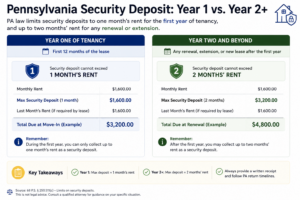
Pennsylvania caps security deposits at two months’ rent during the first year of tenancy, dropping to one month’s rent for the second year and beyond. According to research, this isn’t just a suggested guideline, it’s a legal cap, and collecting more exposes you to real liability if a tenant challenges it.
The detail that trips up landlords most often involves interest. If you’re holding more than $100 in deposit for longer than two years, that money must sit in a federally insured, interest-bearing account, and any interest earned after the second year legally belongs to the tenant, not you. There’s also what’s sometimes called the five-year freeze: after five years of continuous occupancy, you cannot increase the deposit amount, even if you raise the rent significantly in that period.
Returns matter just as much as collection. Pennsylvania gives landlords 30 days after move-out to either return the full deposit or provide an itemized list of deductions. Miss that window, and the consequence is severe: you can owe the tenant double the deposit amount.
Notice to Enter: The Rule Most Owners Get Wrong
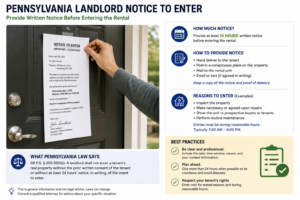
Pennsylvania doesn’t set a statewide notice period for entry the way it does for eviction, but the standard practice, and what most leases and courts expect, is at least 24 hours’ notice for non-emergency entry, whether for inspections, repairs, or showings. According to research, landlords can enter for inspections, repairs, or emergencies, but proper notice is the operative word for anything that isn’t a genuine emergency.
The exception is obvious but worth stating clearly: an active emergency, a burst pipe, a fire, doesn’t require advance notice. Everything else does, and building that 24-hour window into your standard operating process protects you from a fair housing or harassment complaint that a rushed, unannounced entry could otherwise create.
The gap between “I’m the landlord, I can go in whenever” and what Pennsylvania law actually allows is exactly where most entry-related disputes start.
Eviction: Notice Periods That Depend on the Reason
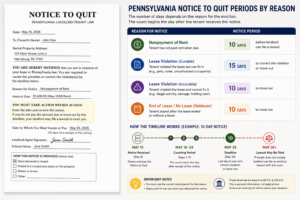
Eviction notice requirements in Pennsylvania depend entirely on why you’re evicting. According to research, nonpayment of rent requires a 10-day Notice to Quit, giving the tenant a chance to pay in full or vacate. Lease violations follow a different timeline: 15 days’ notice for leases of one year or less, or 30 days’ notice for leases longer than a year.
Whatever the reason, Pennsylvania requires the eviction to go through the court system. Self-help eviction, changing locks, removing belongings, shutting off utilities to force a tenant out, is illegal regardless of how clear-cut the violation seems. The process runs through Magisterial District Court, and most proceedings take three to six weeks from filing to resolution, longer if the tenant contests the case or appeals.
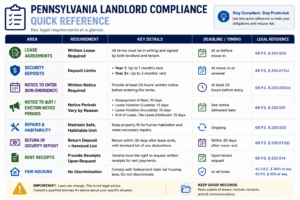
Pennsylvania Landlord Compliance Quick Reference
| Requirement | Rule | Consequence for Non-Compliance |
|---|---|---|
| Security deposit cap, year 1 | Up to 2 months’ rent | Excess deposit may need to be returned, potential penalties |
| Security deposit cap, year 2+ | Up to 1 month’s rent | Same as above |
| Deposit return window | 30 days after move-out | Landlord may owe double the deposit |
| Deposit interest (held 2+ years) | Interest-bearing account required over $100 | Interest owed to tenant, compliance scrutiny |
| Entry notice (non-emergency) | 24 hours standard practice | Potential harassment or fair housing complaint |
| Eviction, nonpayment | 10-day Notice to Quit | Case dismissal if notice period is wrong |
| Eviction, lease violation | 15 days (lease ≤1 year) or 30 days (lease >1 year) | Case dismissal if notice period is wrong |
| Self-help eviction | Illegal under all circumstances | Significant legal liability |
When to Handle Compliance Yourself vs. When to Get Help

Self-managing compliance can work when:
- You’re comfortable tracking specific dollar amounts and dates precisely, not approximately
- You have a reliable system for documenting notices, entries, and deposit handling
- Your situation is straightforward, a single property, no unusual lease terms
Getting professional help makes sense when:
- You’re unsure which notice period applies to a specific eviction situation
- You’re managing multiple properties where tracking deposit amounts and dates manually becomes error-prone
- A dispute has already started and the cost of a mistake is rising
Compliance mistakes are rarely dramatic. They’re usually a forgotten 30-day deadline or a deposit collected slightly over the legal cap, the kind of error that’s completely avoidable with the right system in place.
Getting Started: Building Compliance Into Your Process
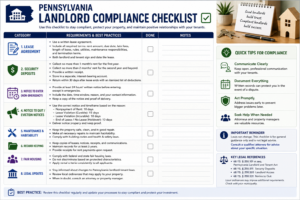
Calculate your maximum deposit correctly before move-in. Two months in year one, one month starting year two, and never more regardless of what a previous landlord in another state may have told you was normal.
Set a calendar reminder for the 30-day deposit return window. This is one of the most common, and most expensive, compliance misses.
Use the correct notice period for the specific eviction reason. A 10-day notice used for a lease violation, or vice versa, can get a case dismissed and force you to start over.
Document every non-emergency entry with proper notice. A simple written log protects you if an entry is ever disputed.
Ready to Take Compliance Off Your Plate Entirely?
If tracking deposit deadlines, notice periods, and entry documentation across your properties feels like a full-time job on top of your actual job, that’s exactly the kind of detail professional management is built to handle correctly, every time.
Frequently Asked Questions
How much can a landlord charge for a security deposit in Pennsylvania?
Up to two months’ rent during the first year of tenancy, dropping to a maximum of one month’s rent starting in the second year. This cap is set by the Pennsylvania Landlord and Tenant Act and applies regardless of what a lease attempts to specify otherwise.
How long does a Pennsylvania landlord have to return a security deposit?
30 days after the tenant moves out or provides a forwarding address, whichever is later. The landlord must either return the full deposit or provide an itemized list of deductions within that window, or risk owing the tenant double the deposit amount.
How much notice does a landlord need to give before entering a rental property in Pennsylvania?
Pennsylvania doesn’t set a specific statewide statutory notice period, but 24 hours is the standard practice expected by most leases and courts for non-emergency entry. Genuine emergencies don’t require advance notice.
How many days’ notice is required to evict a tenant for nonpayment of rent in Pennsylvania?
A 10-day Notice to Quit is required for nonpayment of rent, giving the tenant the opportunity to pay the full amount owed or vacate before the landlord can file in Magisterial District Court.
Can a Pennsylvania landlord change the locks to remove a tenant?
No. Self-help eviction, including changing locks, removing belongings, or shutting off utilities to force a tenant out, is illegal in Pennsylvania regardless of the circumstances. All evictions must go through the court system and end with a court-ordered writ of possession.
Does Pennsylvania require landlords to pay interest on security deposits?
Yes, under certain conditions. If a deposit exceeding $100 is held for longer than two years, it must be kept in an interest-bearing account, and any interest earned after the second year belongs to the tenant.
How Rentwell Helps Owners Make This Shift
This is the exact shift Rentwell builds for owners across Philadelphia and Pittsburgh: leasing systems that fill vacancies on a predictable schedule, a maintenance program that catches issues before they get expensive, and owner reporting that answers the question before it gets asked. Owners get their hours back, and they get them back with a clearer picture of how each property is actually performing.
If self-managing is starting to feel like a second job instead of an investment, a second set of eyes on the setup costs nothing.
Rentwell is a full-service property management company serving Philadelphia, Pittsburgh, West Chester, and the surrounding Pennsylvania communities. With offices in Clifton Heights, Pittsburgh, and West Chester, Rentwell helps real estate investors protect their assets, reduce operational stress, and build long-term wealth through professional property management.