Real estate remains a sound investment in 2026 for investors focused on cash flow and long-term holding, not for those chasing fast appreciation or quick liquidity. Higher borrowing costs and a softer rental market mean the deals that work require tighter underwriting than a few years ago, but the fundamentals, inflation-linked rent growth, tax advantages, and a persistent national housing shortage, remain genuinely intact.
Every asset class goes through a stretch where the confident headlines from a few years back get replaced with more cautious ones. Real estate is in exactly that stretch right now, higher rates, softer rents in some markets, more inventory than investors have seen in years. It’s a fair moment to ask whether the whole thesis still holds.
The honest answer isn’t a simple yes or no. It depends heavily on what you’re actually trying to get out of the investment, and the goals that made real estate a poor fit in 2026 are different from the ones that still make it a strong one.
What Actually Changed, and What Didn’t
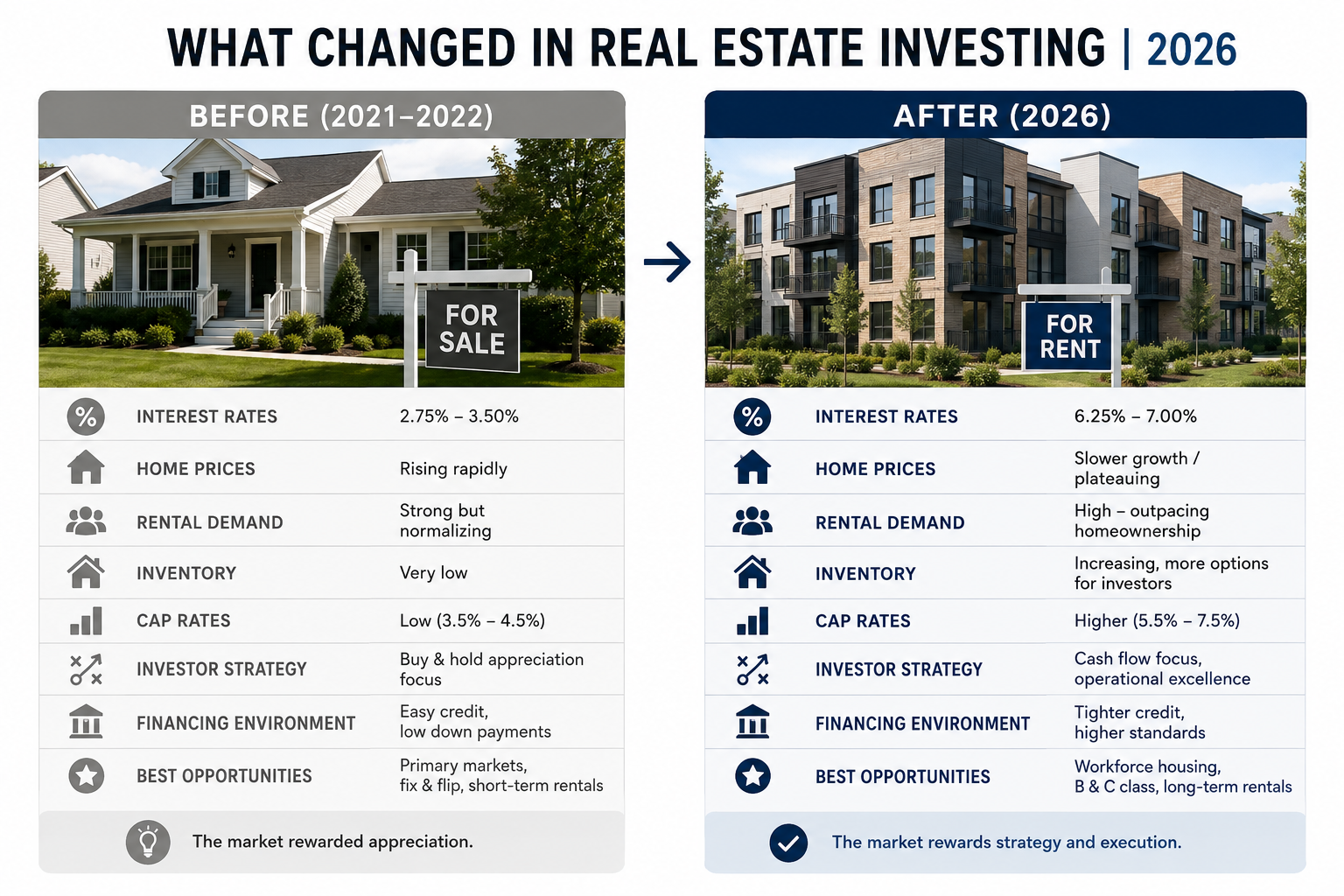
What changed: borrowing costs. Investment property mortgage rates running in the 7% range make new acquisitions genuinely harder to underwrite than they were a few years ago, and that’s a real constraint, not a headline exaggeration. Rental market softness in some metros has also stretched time-to-lease longer than investors got used to during tighter years.
What didn’t change: the core mechanics that made real estate attractive in the first place. According to research, the national housing shortage remains a multi-million-unit deficit that new construction isn’t closing quickly, tax advantages including depreciation and mortgage interest deductions remain fully in place, and rents historically continue tracking with inflation over time even when individual years run soft.
The Distinction That Actually Matters: Cash Flow Goals vs. Appreciation Goals
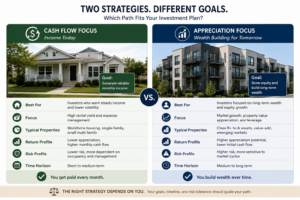
The honest 2026 answer splits cleanly along one line: if your goal is long-term wealth through appreciation and tax benefits, rental property continues to offer strong potential. If you need immediate high cash flow, good deals are harder to find right now unless you’re targeting specific markets or bringing a larger down payment.
This distinction matters more than almost anything else in evaluating whether now is a good time for you specifically. An investor with a ten-year horizon, comfortable riding out a softer near-term rental market in exchange for long-term equity growth and tax efficiency, is in a fundamentally different position than someone hoping a new purchase throws off strong cash flow within the first year.
“Is real estate a good investment” isn’t really the question. “Is real estate a good investment for what I’m specifically trying to accomplish, on this timeline” is the question that actually has a useful answer.
The Fixed-Rate Debt Advantage That’s Easy to Overlook
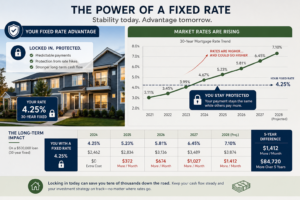
One of the more counterintuitive points in the current environment: existing investors holding low, fixed-rate debt are arguably better positioned now than they were when rates were lower. According to analysis, a property purchased with a 3% fixed-rate loan looks increasingly attractive as market rates climb toward 7%, since the investor’s debt cost stays locked while market rents and property values tend to rise around it.
This is worth internalizing whether you’re an existing owner or someone evaluating a new purchase. For existing owners, it’s a reminder that today’s rate headlines mostly describe someone else’s cost structure, not yours. For new buyers, it’s a reason the underwriting discipline matters more now, since the goal is locking in today’s rate as tomorrow’s advantage, the same way current owners are benefiting from decisions made years ago.
What “Still a Good Investment” Actually Requires in 2026
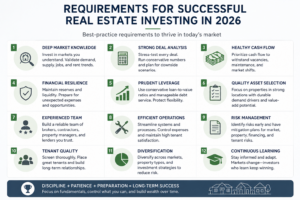
| Requirement | Why It Matters More Now |
| Underwrite at current rates, not historical ones | A deal that only works at a lower hypothetical rate isn’t a real deal |
| Focus on cash-flow-positive markets and property types | Appreciation alone is a weaker bet in a higher-rate, softer-rent environment |
| Maintain healthy reserves | Higher maintenance and insurance costs are compressing margins across the industry |
| Commit to a long-term holding horizon | Real estate’s return profile rewards patience more than it did during faster appreciation cycles |
| Recognize fixed-rate debt as a genuine asset | Locked-in low rates compound in value as market rates stay elevated |
When Real Estate Still Makes Sense vs. When to Wait
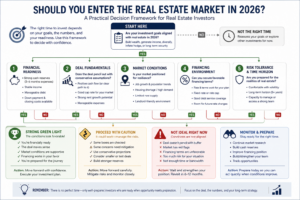
Real estate still makes strong sense when:
- You’re investing with a long-term horizon, thinking in years or decades, not months
- You can underwrite a deal that cash flows at today’s actual rates, not a hoped-for lower one
- You value the tax advantages, depreciation, mortgage interest deduction, alongside the income and appreciation potential
It’s reasonable to wait or be more selective when:
- You need the investment to produce strong cash flow immediately, with little room for a softer first year or two
- You don’t have reserves to absorb a longer vacancy or higher-than-expected maintenance costs
- You’re chasing quick appreciation rather than planning to hold long enough for the fundamentals to play out
Getting Started: Evaluating a 2026 Deal Honestly

Underwrite every new deal at today’s actual mortgage rate. Resist the temptation to model a rate you’re hoping for rather than the one you can actually get.
Prioritize markets and property types with genuine cash-flow potential. In this environment, that discipline matters more than chasing markets purely for appreciation upside.
Build in a realistic reserve for vacancy and maintenance. Current market softness and rising repair costs both argue for a more conservative cushion than a few years ago.
Commit to your actual timeline before you buy. Real estate in 2026 rewards patient capital more clearly than it rewards a short holding period.
Ready to Run the Numbers on a Real Deal?
If you’re weighing whether now is the right time for your next property, running the real numbers against today’s actual rates and your specific goals is worth doing before the market decides for you.
Frequently Asked Questions
Is real estate still a good investment in 2026 given higher interest rates?
Yes, for investors focused on long-term cash flow and holding periods, though higher rates require tighter underwriting than a few years ago. It’s a weaker fit for investors seeking immediate high cash flow or planning a short holding period.
What’s the biggest change in real estate investing in 2026 compared to a few years ago?
Borrowing costs. Investment property mortgage rates running around 7% require more conservative underwriting than the lower-rate environment investors got used to, even though the underlying fundamentals, tax advantages, inflation-linked rent growth, and housing shortage, remain largely intact.
Does real estate still work as an inflation hedge in 2026?
Generally yes, since rents and property values have historically tracked with inflation over time, but this isn’t guaranteed in any single year and depends on property type, market, and how the investment is financed and managed.
Should I wait for interest rates to drop before buying a rental property?
Waiting purely on the hope of lower rates is a speculative bet rather than an investment strategy. A better approach is underwriting deals honestly at today’s actual rates and only proceeding when the numbers work as they currently stand.
What tax advantages does real estate still offer in 2026?
Depreciation, mortgage interest deductions, and other real estate-specific tax benefits remain in place, helping offset taxable income from rental properties. These advantages are a meaningful part of real estate’s overall return profile independent of cash flow or appreciation.
Is real estate a good investment for someone who needs cash flow immediately?
It’s a harder environment for that specific goal in 2026. Immediate strong cash flow generally requires targeting specific markets or bringing a larger down payment, since the combination of higher borrowing costs and softer rents in some areas has compressed near-term returns.
How Rentwell Helps Owners Make This Shift
This is the exact shift Rentwell builds for owners across Philadelphia and Pittsburgh: leasing systems that fill vacancies on a predictable schedule, a maintenance program that catches issues before they get expensive, and owner reporting that answers the question before it gets asked. Owners get their hours back, and they get them back with a clearer picture of how each property is actually performing.
If self-managing is starting to feel like a second job instead of an investment, a second set of eyes on the setup costs nothing.
Rentwell is a full-service property management company serving Philadelphia, Pittsburgh, West Chester, and the surrounding Pennsylvania communities. With offices in Clifton Heights, Pittsburgh, and West Chester, Rentwell helps real estate investors protect their assets, reduce operational stress, and build long-term wealth through professional property management.