For most first-time Pennsylvania landlords, holding a rental property in an LLC provides real liability protection but comes with a realty transfer tax, generally 1% to 2% of the property’s value, unless you qualify for the same-ownership exemption, plus ongoing administrative costs. Personal-name ownership is simpler and avoids the transfer tax, but leaves your personal assets exposed to lawsuits tied to the property.
Somewhere around your second conversation with another investor, someone tells you to “just put it in an LLC.” It’s common advice, and it’s not wrong exactly, but it also isn’t the whole answer. An LLC solves a specific problem, liability exposure, and it creates specific costs and complications in exchange. Whether that trade makes sense depends on how many properties you own, how much equity is at stake, and how you’re financing.
I’ve talked to owners who formed an LLC on a single, modestly-valued rental and spent more on transfer tax and legal setup than the liability risk probably justified. I’ve also talked to owners with a growing portfolio who waited too long to separate personal and business assets and ended up more exposed than they realized. Neither mistake is really about the LLC itself. It’s about not understanding what the structure actually changes before deciding.
What an LLC Actually Protects You From

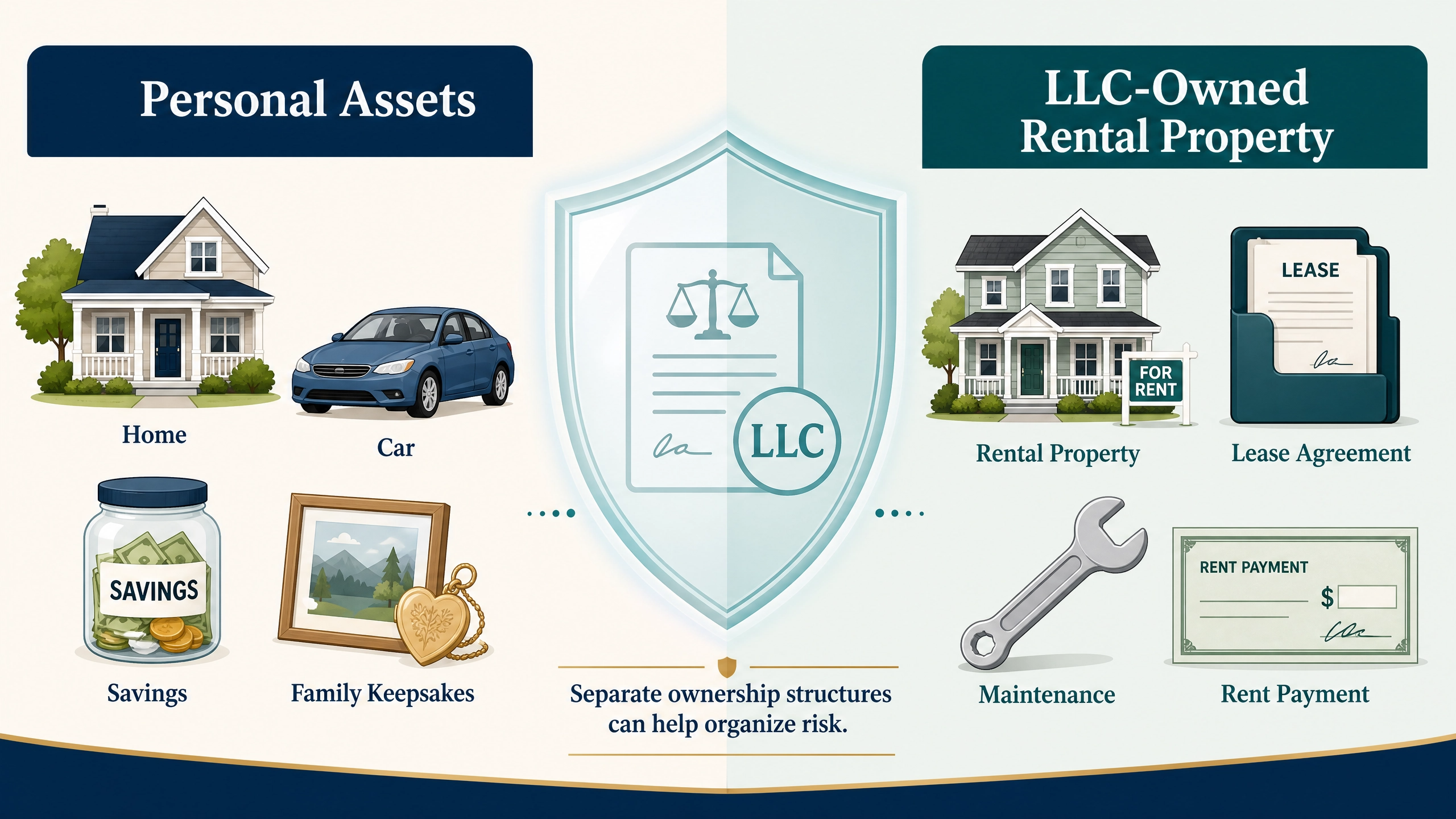
An LLC creates a legal separation between the property and your personal assets. If a tenant or visitor is injured on the property and sues, a properly maintained LLC generally limits their claim to the assets inside the LLC, not your personal savings, your home, or other investments outside it. This protection depends on treating the LLC as a genuinely separate entity, with its own bank account and clean recordkeeping, not just a name on the deed.
What an LLC does not do matters just as much. It doesn’t protect you from your own personal negligence, meaning if you personally caused the injury through a direct action, the LLC won’t shield you from that claim. It doesn’t replace insurance, landlord liability coverage remains your primary defense either way. And it doesn’t automatically reduce your taxes, since a single-member LLC is a pass-through entity by default, so rental income still lands on your personal return exactly as it would without the LLC.
What It Actually Costs in Pennsylvania
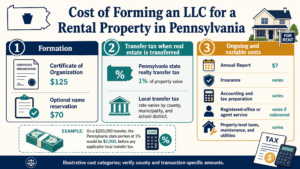
This is the part that surprises a lot of first-time landlords. Pennsylvania’s state realty transfer tax 1% of the property’s value, and most counties add a local transfer tax on top, which frequently brings the combined total to around 2%. That tax applies when you transfer title from your personal name into an LLC, even if you’re the sole owner of both.
There’s a meaningful exemption worth knowing about. Under Pennsylvania law, a transfer to an LLC that’s wholly owned by the same person, or the same married couple, both before and after the transfer, can qualify for an exemption from the transfer tax. You’d file a Realty Transfer Tax Statement of Value with the deed to claim it. One catch: that exemption can be clawed back if the LLC’s ownership changes within three years of the transfer, so it’s not something to lean on if you’re planning to bring in a partner soon.
Beyond transfer tax, budget for LLC formation fees, a registered agent if you use one, and potentially a new bank account and bookkeeping setup. None of these individually are large, but they add up, and they’re recurring in a way that personal-name ownership simply isn’t.
An LLC doesn’t make your rental safer. It makes the risk contained, and containment has a price tag attached to it.
The Financing and Mortgage Complication
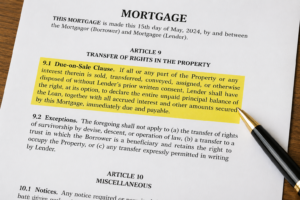
If your property already has a mortgage, transferring title into an LLC can trigger the lender’s due-on-sale clause, the standard provision that lets a lender demand the full remaining balance if ownership changes. According to research, most residential mortgages include this clause, and while many lenders don’t enforce it for a transfer to a single-member LLC owned by the same borrower, they’re legally entitled to.
The safer path is contacting your lender before transferring title, not after. Some lenders will formally approve the transfer. Others may require refinancing into a commercial or portfolio loan, which typically carries different terms than a standard residential mortgage. Skipping this step and hoping it goes unnoticed isn’t a strategy, it’s a risk you’re taking on top of the one you’re trying to reduce.
LLC vs. Personal Name: How They Actually Compare
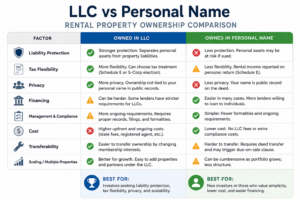
| Factor | LLC Ownership | Personal Name Ownership |
|---|---|---|
| Liability protection | Separates personal assets from property-related claims, if maintained properly | None, personal assets are exposed to property-related lawsuits |
| Pennsylvania transfer tax | Generally 1-2% of property value, exemption available for same-owner transfers | None, no transfer occurs |
| Tax reporting | Pass-through by default, reported on personal return, same as personal ownership | Reported directly on personal return |
| Tax reporting | Pass-through by default, reported on personal return, same as personal ownership | Reported directly on personal return |
| Financing | May trigger due-on-sale clause, could require lender approval or refinancing | No impact on existing mortgage |
| Administrative burden | Separate bank account, recordkeeping, annual registration fees | Minimal, folded into personal finances |
| Best fit | Multiple properties, higher equity at stake, or growing portfolio | Single property, modest equity, strong insurance coverage already in place |
The pattern that shows up across every row is that an LLC trades simplicity for containment. Whether that trade is worth it depends almost entirely on how much you have at risk and how many properties you’re managing.
When Each Structure Makes More Sense
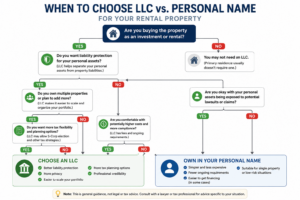
An LLC tends to make more sense when:
- You own multiple properties, since one lawsuit shouldn’t put your entire portfolio at risk
- You have significant equity or other assets you want to keep separate from a single property’s liability exposure
- You’re planning to bring in partners or investors down the line, where a formal entity structure will be necessary regardless
Owners in this position often find the transfer tax and administrative cost worth it, especially if they act early rather than transferring a heavily appreciated property later, when the tax bill on the transfer is larger.
Personal-name ownership can still make sense when:
- You own a single rental with modest equity and a strong landlord liability insurance policy already in place
- You’re not planning to add properties in the near term
- The transfer tax cost, particularly without a same-owner exemption, would outweigh the realistic liability exposure
Neither of these lists is a permanent decision. Plenty of owners start in their personal name and transition into an LLC once the portfolio grows or the equity at stake changes the math.
Getting Started: A Few Things Worth Doing Before You Decide
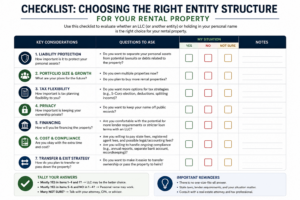
Talk to a Pennsylvania real estate attorney before transferring title. The transfer tax exemption rules are specific, and a mistake here is expensive and hard to unwind after the fact.
Call your mortgage lender before, not after. Confirm in writing whether your loan’s due-on-sale clause will be enforced or waived for the transfer you’re planning.
Confirm your insurance is structured to match your entity. If you form an LLC, your landlord policy needs to reflect that ownership, or a claim could be denied on a technicality.
Reassess as your portfolio grows. A structure that made sense for one property may not fit once you’re managing five, especially around liability containment and financing flexibility.
Ready to Talk Through Your Specific Situation?
Entity structure decisions are personal to your portfolio size, your financing, and your risk tolerance. If you want a second set of eyes on how your ownership structure interacts with your management setup, that’s worth a conversation before you transfer anything.
Frequently Asked Questions
Do I need an LLC to rent out a property in Pennsylvania?
No. Pennsylvania does not require rental properties to be held in an LLC. Many landlords, particularly those with a single property, rent successfully under personal ownership, relying on landlord liability insurance for protection instead.
How much does it cost to transfer a rental property into an LLC in Pennsylvania?
Pennsylvania’s state realty transfer tax is 1% of the property’s value, with most counties adding a local transfer tax that typically brings the combined total to around 2%. An exemption may apply if the LLC is wholly owned by the same person or married couple before and after the transfer.
Will transferring my rental into an LLC trigger my mortgage’s due-on-sale clause?
It can. Most residential mortgages include a due-on-sale clause that technically allows the lender to demand full repayment upon a change in ownership. Contact your lender before transferring title to confirm how they’ll handle the transfer.
Does an LLC reduce the taxes I pay on rental income?
Not automatically. A single-member LLC is a pass-through entity by default, meaning rental income is still reported on your personal tax return exactly as it would be under personal ownership. Any tax benefits come from broader tax planning, not the LLC structure itself.
What’s the Pennsylvania exemption for transferring a rental property into an LLC?
An exemption from the realty transfer tax may apply when the LLC is wholly owned by the same person, or the same married couple, both before and after the transfer. This requires filing a Realty Transfer Tax Statement of Value with the deed, and the exemption can be clawed back if ownership changes within three years.
At what point should I move from personal ownership to an LLC?
Many owners reconsider their structure as their portfolio grows past one or two properties, as equity increases, or before bringing in partners or investors. There’s no fixed threshold, it depends on how much you have at risk and your comfort with the added administrative cost.
How Rentwell Helps Owners Make This Shift
This is the exact shift Rentwell builds for owners across Philadelphia and Pittsburgh: leasing systems that fill vacancies on a predictable schedule, a maintenance program that catches issues before they get expensive, and owner reporting that answers the question before it gets asked. Owners get their hours back, and they get them back with a clearer picture of how each property is actually performing.
If self-managing is starting to feel like a second job instead of an investment, a second set of eyes on the setup costs nothing.
Rentwell is a full-service property management company serving Philadelphia, Pittsburgh, West Chester, and the surrounding Pennsylvania communities. With offices in Clifton Heights, Pittsburgh, and West Chester, Rentwell helps real estate investors protect their assets, reduce operational stress, and build long-term wealth through professional property management.