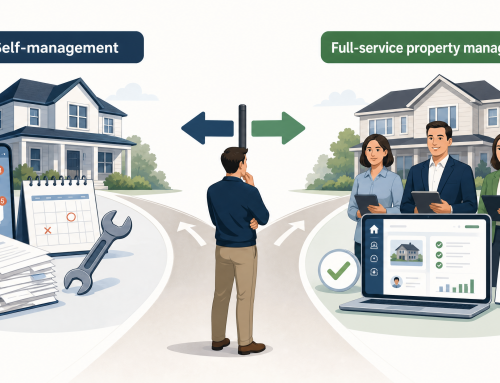

The clearest signs it’s time to hire a property manager are consistently missed maintenance windows, growing tenant turnover, portfolio growth past what you can personally track, and a self-management workload that’s started costing you more in missed opportunities than a management fee would. If you’re dreading your phone more than you’re using it, that’s usually the real signal.
You didn’t start self-managing because you loved paperwork. You did it because the math worked, or because one property felt manageable, or because handing off control felt like giving something up. None of that was wrong. But the version of self-management that worked for one property, three years ago, isn’t automatically the version that works for your situation today.
Most owners don’t decide to hire a property manager in a single dramatic moment. It’s usually a slow accumulation, a few late-night maintenance calls, a tenant complaint that took too long to resolve, a growing sense that you’re always slightly behind. Here are the five signs worth paying attention to, because waiting until burnout forces the decision usually costs more than making the call earlier would have.
You’re Spending More Time on This Than the Numbers Justify

According to research, self-managing landlords spend an average of 10 to 20 hours a month per property on calls, paperwork, showings, and repairs. Run the math on your own hourly value. If you earn $50 an hour in your career and spend 15 hours a month managing your rental, that’s $750 a month in opportunity cost, more than most management fees.
The tricky part is that this cost doesn’t show up on any spreadsheet. It shows up as missed time with family, a work project that slipped, or a Saturday that disappeared into vendor coordination. It’s real, even when it’s invisible.
You’re Behind on Maintenance, Not Ahead of It
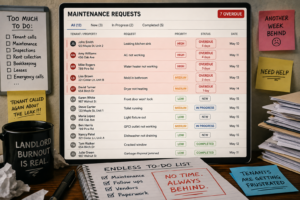
Good self-management looks like preventive maintenance and quick response times. When you notice you’re reacting to problems instead of catching them early, skipping the seasonal HVAC check, letting a tenant’s request sit for a few days because you’re slammed, that’s a structural shift, not a bad week.
This pattern tends to compound. A delayed repair becomes a bigger repair. A tenant who feels ignored becomes a tenant who doesn’t renew. What started as a scheduling problem turns into a retention and cost problem within a season or two.
Your After-Hours Availability Doesn’t Match What Tenants Actually Need
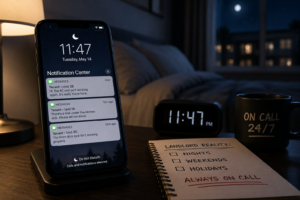
Data shows that 61% of rental inquiries now happen outside standard business hours, and that expectation extends to existing tenants too, especially for anything that feels like an emergency. If you’re not available nights and weekends, or you are but it’s wearing on you, that gap between what tenants expect and what you can realistically provide is where relationships start to fray.
The sign isn’t that something went wrong once. It’s that you can feel yourself bracing for the next call instead of just answering it.
Your Portfolio Has Outgrown What You Can Track in Your Head

Self-managing one property is a different job than self-managing four. Lease renewal dates, maintenance history, tenant communication threads, and financial records all multiply, and a system that worked fine with a mental checklist and a shared inbox starts breaking down. If you’ve caught yourself missing a renewal date, or genuinely can’t remember the last time you inspected one of your properties, that’s not a you problem. It’s a systems problem, and it’s the exact problem professional management infrastructure is built to solve.
You’re Overwhelmed More Often Than You’re Not

65% of self-managing landlords report feeling overwhelmed by their responsibilities at least some of the time. Occasional overwhelm is normal for any hands-on business. The sign worth acting on is when overwhelm becomes the default state rather than the exception, when your first reaction to a tenant call is dread instead of just answering it.
This is also the sign owners tend to minimize the longest, because it doesn’t have a dollar figure attached the way a vacancy or a bad tenant does. But the cost is real. Burnout leads to shortcuts, delayed responses, and decisions made from exhaustion rather than judgment, all of which end up costing more than the management fee that would have prevented them.
Self-Managing Still Works vs. It’s Time for Help

Self-managing can still work when:
- You own one property, live nearby, and consistently have the bandwidth each month
- Maintenance stays ahead of schedule rather than behind it
- You’re comfortable being reachable for calls at inconvenient hours, without it wearing on you
It’s time to bring in help when:
- Your time cost, calculated honestly against your hourly value, exceeds what a management fee would run
- You’re consistently reactive on maintenance instead of proactive
- Overwhelm has become the default, not the exception
Most owners know which column they’re in before they finish reading the list. The harder part is admitting it before the cost of waiting gets higher.
Getting Started: What to Do If You Recognize These Signs

Run the real numbers first. Calculate your actual monthly time cost using your own hourly value, not a guess, and compare it honestly to typical management fees in your market.
Decide how much control you want to keep. Full-service management isn’t the only option. Back-office support services can handle the administrative and financial side while you keep more hands-on involvement in tenant relationships, if that split fits you better.
Interview more than one company. Ask specifically about after-hours response, maintenance approval processes, and how they report financials, the three areas most likely to determine whether the switch actually solves your problem.
Don’t wait for a crisis to make the decision for you. The owners who transition earliest tend to do it with the least stress and the best outcomes, because they’re choosing it rather than being forced into it.
Frequently Asked Questions
How many hours a month does self-managing a rental property actually take?
Research puts the average at 10 to 20 hours per month per property, covering tenant communication, maintenance coordination, showings, and paperwork. That time commitment scales with each additional property you own.
Is it worth hiring a property manager for just one rental property?
It depends on your time value, proximity to the property, and comfort with hands-on management. If your calculated time cost exceeds a typical management fee, or if maintenance and communication have started slipping, hiring help often pays for itself even for a single property.
What are the biggest signs of landlord burnout?
Common signs include consistently reactive maintenance instead of proactive upkeep, dread around tenant calls, missed lease renewal dates, and a general sense of being overwhelmed more often than not. These tend to build gradually rather than appearing all at once.
Can I get partial help without giving up full control of my rental?
Yes. Back-office support services can handle administrative and financial tasks like bookkeeping, rent collection, and reporting while you retain hands-on involvement in tenant relationships and property decisions, offering a middle ground between full self-management and full-service management.
Does hiring a property manager mean I lose control over my property?
No. A good property manager sets clear decision thresholds with you upfront, handling routine items directly while bringing larger decisions, repairs above an agreed dollar amount, lease terms, major vendor choices, back to you for approval.
What should I look for when interviewing property management companies?
Ask specifically about after-hours response times and who actually answers emergency calls, how they handle maintenance approval thresholds, and what their financial reporting looks like in practice, ideally requesting a sample statement before signing anything.
How Rentwell Helps Owners Make This Shift
This is the exact shift Rentwell builds for owners across Philadelphia and Pittsburgh: leasing systems that fill vacancies on a predictable schedule, a maintenance program that catches issues before they get expensive, and owner reporting that answers the question before it gets asked. Owners get their hours back, and they get them back with a clearer picture of how each property is actually performing.
If self-managing is starting to feel like a second job instead of an investment, a second set of eyes on the setup costs nothing.
Rentwell is a full-service property management company serving Philadelphia, Pittsburgh, West Chester, and the surrounding Pennsylvania communities. With offices in Clifton Heights, Pittsburgh, and West Chester, Rentwell helps real estate investors protect their assets, reduce operational stress, and build long-term wealth through professional property management.