A move-in inspection is a walkthrough, usually with both the tenant and property manager present, that documents the exact condition of a rental unit before the tenant takes possession. It typically covers every room, notes any pre-existing damage with photos, and produces a signed record both parties can reference later. This single document is one of the strongest protections a tenant has for their security deposit.
Walking through an empty or newly turned-over unit with a clipboard, or more likely a phone and an app, might feel like a formality standing between you and unpacking your boxes. It isn’t. This walkthrough is the single best tool you have to make sure you’re never blamed, or charged, for damage that existed before you ever moved in.
Knowing what to expect, and what to actually do during the inspection, turns it from a passive formality into something that genuinely protects you.
What the Inspection Actually Covers
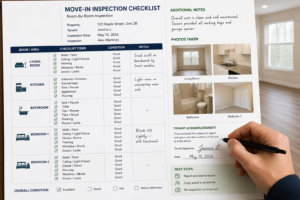
A thorough move-in inspection works room by room: walls, floors, and ceilings checked for cracks, stains, or damage; windows and doors checked for function and seals; outlets and light switches tested; appliances checked for working condition; and any existing wear, scuffs, small nail holes, minor scratches, noted clearly. The goal is a complete condition record covering every area of the property, not just an informal glance around.
Exterior areas matter too if your unit has them, a private entrance, a patio, or a yard. Roof lines, gutters, and any visible exterior damage should get noted the same way interior spaces do, since these areas can also become disputed points at move-out if they weren’t documented at the start.
Why This Matters More Than It Seems

Every experienced renter eventually hears a version of the same story: a disagreement at move-out about whether a specific mark or crack was there from the start. According to research, a documented move-in record, especially one with photos, creates a shared reference point that resolves exactly this kind of disagreement before it can even start.
Without that record, move-out disputes often come down to memory versus memory, which rarely resolves in the tenant’s favor. With it, a disputed scuff mark is either on the move-in documentation or it isn’t, and that’s usually the end of the conversation.
The move-in inspection isn’t really about the property. It’s about creating proof that protects you months or years from now, when you won’t remember the details as clearly as a photo does.
Normal Wear and Tear vs. Damage: The Distinction That Matters
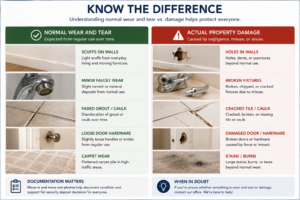
The move-in inspection is a good moment to understand the difference between normal wear and tear, which shouldn’t affect your deposit, and actual damage, which might. A small paint chip in a sink or minor carpet fading from sunlight is normal wear and tear. Molding chewed by a previous tenant’s pet, or a large stain from water damage, is the kind of thing that should be clearly flagged and photographed before you take possession, so it’s unmistakably not something you’re responsible for.
This distinction is worth asking about directly during the walkthrough if anything seems ambiguous. A property manager doing this well should welcome that question, not treat it as confrontational.
Before, During, and After: Making the Inspection Work for You
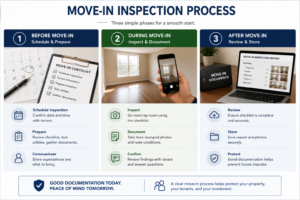
| Phase | What to Do |
|---|---|
| Before the walkthrough | Set aside enough time to go through every room carefully, don’t rush it |
| During the walkthrough | Photograph anything questionable, ask about anything ambiguous, note the date on every photo |
| Immediately after | Confirm you received a copy of the signed inspection document for your own records |
| Throughout your tenancy | Keep your copy accessible, you may need to reference it at move-out |
When to Ask Questions vs. When to Just Document and Move On

Ask a direct question when:
- Something looks like damage but you’re not sure if it counts as normal wear and tear
- An item on the inspection form doesn’t match what you’re actually seeing in the unit
- You notice something that seems like it should be repaired before you move in, not just documented
Document and move on when:
- The item is clearly minor and already noted accurately on the form
- It’s cosmetic and doesn’t affect function or habitability
- Both you and the property manager already agree on what it is
Getting Started: Making the Most of Your Move-In Inspection

Don’t rush the walkthrough, even if you’re eager to start unpacking. Fifteen extra minutes spent documenting carefully can save you a deposit dispute months later.
Photograph everything that seems even slightly questionable. It costs nothing to take an extra photo, and you can’t go back and document something after you’ve already moved your belongings in.
Ask for a copy of the completed inspection before you sign anything final. This is your record too, not just the property manager’s.
Keep your copy somewhere you’ll actually be able to find it at move-out. A digital copy saved in an easily searchable place, not a paper form buried in a drawer, serves you best.
Ready to See What a Well-Run Move-In Process Looks Like?
A thorough, documented move-in inspection is part of what a well-run tenancy looks like from day one, protecting both you and the property.
Frequently Asked Questions
What happens during a move-in inspection?
A move-in inspection is a room-by-room walkthrough, typically with both the tenant and property manager present, documenting the exact condition of the unit before the tenant takes possession. It covers walls, floors, appliances, fixtures, and any existing wear or damage, usually supported by photos and a signed written record.
Why is a move-in inspection important for tenants?
It creates a documented, dated record of the property’s condition before you moved in, which protects you from being held responsible for pre-existing damage at move-out. Without this record, disputes often come down to memory rather than evidence.
What’s the difference between normal wear and tear and damage during an inspection?
Normal wear and tear includes minor, expected signs of use, like small paint chips or faded carpet from sunlight, and typically shouldn’t affect your security deposit. Damage, like large stains, chewed molding, or broken fixtures, should be clearly flagged and documented before you take possession if it already existed.
Should I take my own photos during the move-in inspection, even if the property manager is documenting it too?
Yes. Having your own photos, saved somewhere you can easily access later, gives you an independent record in addition to whatever the property manager documents, which offers extra protection if any question comes up at move-out.
What should I do if I notice damage that isn’t on the move-in inspection form?
Point it out immediately and ask for it to be added and photographed before you sign the completed inspection. Once you’ve taken possession, it becomes much harder to prove an issue existed beforehand if it wasn’t documented at move-in.
Do I need to be present for the move-in inspection?
While not always required, being present is strongly recommended. It gives you the chance to ask questions, point out anything questionable in real time, and ensure the documented condition matches what you’re actually seeing before you sign off on it.
How Rentwell Helps Owners Make This Shift
This is the exact shift Rentwell builds for owners across Philadelphia and Pittsburgh: leasing systems that fill vacancies on a predictable schedule, a maintenance program that catches issues before they get expensive, and owner reporting that answers the question before it gets asked. Owners get their hours back, and they get them back with a clearer picture of how each property is actually performing.
If self-managing is starting to feel like a second job instead of an investment, a second set of eyes on the setup costs nothing.
Rentwell is a full-service property management company serving Philadelphia, Pittsburgh, West Chester, and the surrounding Pennsylvania communities. With offices in Clifton Heights, Pittsburgh, and West Chester, Rentwell helps real estate investors protect their assets, reduce operational stress, and build long-term wealth through professional property management.