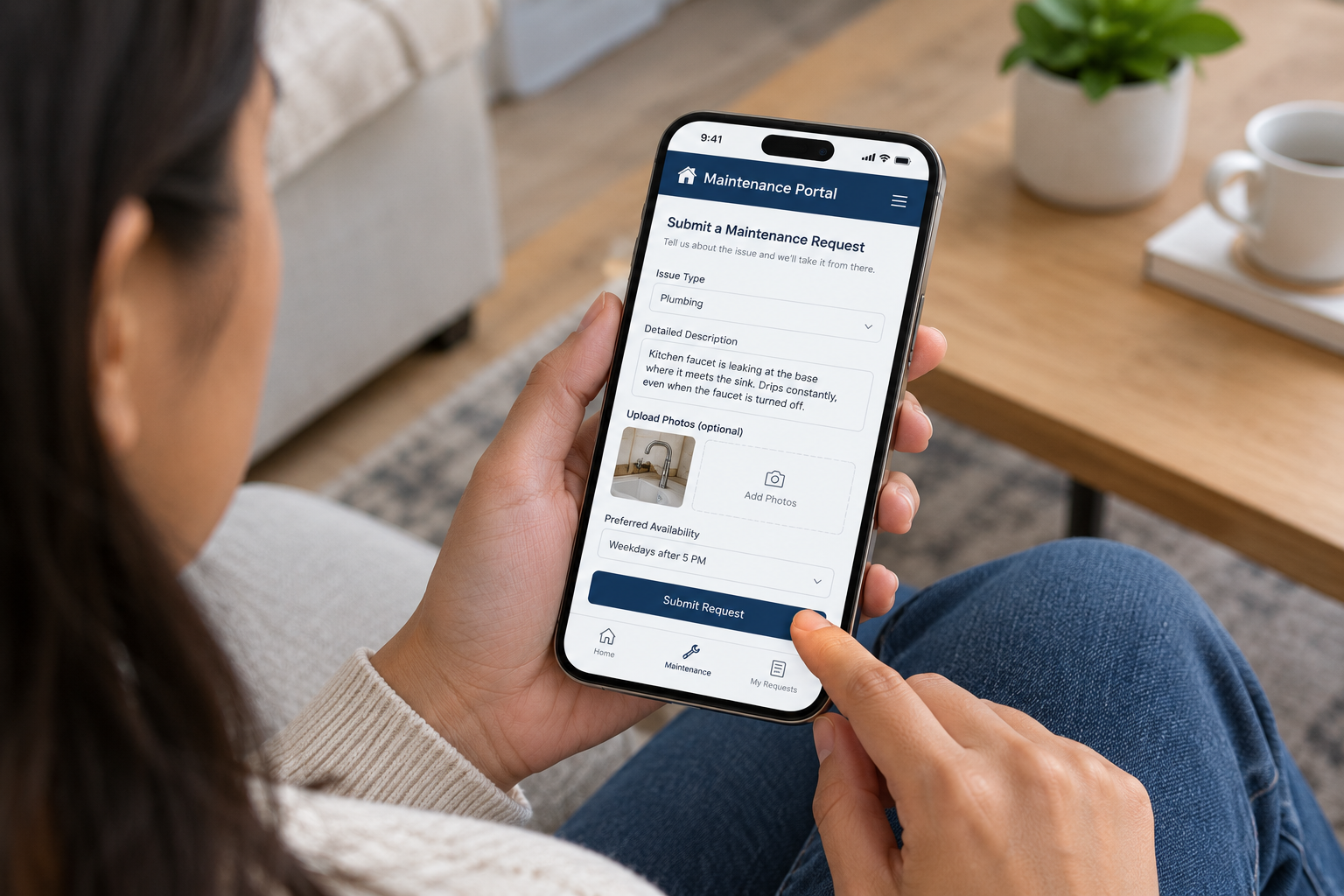
A maintenance request that gets resolved fast includes a clear description of the problem, when it started, what makes it worse or better, and at least one photo. Requests submitted through a portal or in writing, rather than a hallway comment or a text with no detail, also create a documented record that protects both the tenant and the property owner if any question comes up later.
The gap between “my sink won’t stop dripping” and a detailed request with a photo and a few specifics might not seem like much, but it’s often the difference between a same-day fix and a repair that takes a week longer than it needed to. Whoever’s triaging maintenance requests, a property manager or a landlord, can only act as fast as the information they’re given.
Submitting a request well isn’t about being demanding or overly formal. It’s a handful of habits that make the whole process faster for everyone involved, including you.
Describe the Problem Specifically, Not Generally
“The kitchen faucet drips constantly, worse when the dishwasher is running, started about three days ago” gives a property manager everything needed to triage the issue accurately. “Sink is broken” doesn’t. The specific version lets someone assess urgency correctly and often lets a vendor show up with the right parts already in hand, instead of making a diagnostic visit and a separate repair visit.
Include when the issue started and whether it’s getting worse. A leak that’s been slowly building for two weeks is a different priority than one that just started an hour ago, and that timeline detail helps whoever’s triaging make the right call quickly.
Take a Photo, Even If It Feels Unnecessary
A photo does more work than most tenants expect. According to research, photos create a shared, dated record of a property’s condition, which matters for maintenance requests just as much as it does for move-in and move-out inspections. A photo of water pooling under a cabinet, or a crack in a window, resolves ambiguity instantly in a way a text description alone can’t.
This protects you too. If a question ever comes up later about when an issue started or how severe it was, a dated photo is far stronger evidence than a memory of when you first noticed it.
Use the Official Channel, Not a Hallway Comment
Mentioning a problem in passing, to a property manager you happen to run into, or in a text that gets buried in an unrelated conversation, is the single easiest way for a real issue to slip through the cracks. Submitting through the official channel, a maintenance portal, a dedicated email, or a documented phone line, creates a timestamped record that gets tracked and can’t get lost the way an informal mention can.
This matters even for small issues. A pattern only becomes visible if every instance gets logged somewhere, if a garbage disposal problem happens three times over eight months but only one of those got officially reported, the pattern that would have flagged a larger issue never becomes visible.
The system can only act on what it actually knows about. A problem mentioned in passing and a problem formally reported aren’t the same thing, even if they’re the exact same problem.
Know What Counts as a True Emergency
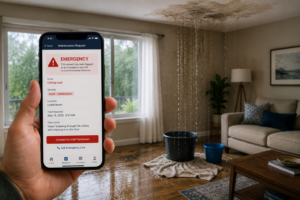
Genuine emergencies, active flooding, a gas smell, no heat in freezing temperatures, a broken exterior lock, deserve immediate contact through whatever emergency channel your property provides, not the standard request form that might not get reviewed until the next business day. The standard for a true emergency is whether delaying could cause injury or significant property damage.
Most maintenance issues aren’t true emergencies, even when they feel urgent in the moment. Knowing the difference helps you use the right channel, which gets a genuine emergency addressed faster and keeps the standard request system working efficiently for everything else.
What to Include vs. What Slows Things Down
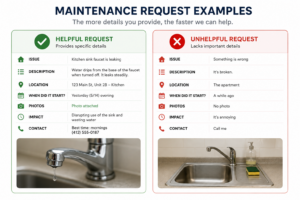
| Element | Helps Get It Fixed Faster | Slows the Process Down |
|---|---|---|
| Description | Specific: what, where, when it started | Vague: “something’s wrong with the sink” |
| Photo | Included, clearly shows the issue | Not included, or unclear what it shows |
| Channel | Official portal, email, or documented line | Hallway comment, buried text message |
| Urgency framing | Matches actual severity | Everything framed as equally urgent |
| Follow-up | Waits for a response before re-submitting | Multiple duplicate requests submitted in frustration |
Getting Started: A Quick Habit to Build
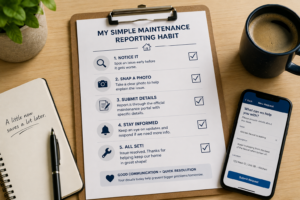
Take a photo the moment you notice an issue. Do this before deciding whether it’s worth reporting, since the photo is what makes the eventual report useful.
Write down when it started and whether it’s changing. This takes ten seconds and gives whoever triages the request real information to work with.
Use the official reporting channel every time, even for small things. This is what creates the documented pattern that catches bigger problems early.
Save true emergencies for the emergency channel. This keeps genuine urgent issues from getting stuck behind a queue of routine requests.
Have a Maintenance Issue to Report?
If something needs attention at your Rentwell-managed property, submitting through the maintenance portal with a clear description and a photo is the fastest path to getting it resolved.
Frequently Asked Questions
What information should I include in a maintenance request?
Include a specific description of the problem, when it started, whether it’s getting worse, and at least one photo. This level of detail lets whoever reviews the request triage it accurately and often lets a vendor arrive prepared with the right parts.
Should I always take a photo when reporting a maintenance issue?
Yes, whenever possible. A photo removes ambiguity that a written description alone can leave, and it creates a dated record that can matter later if any question comes up about when an issue started or how severe it was.
What counts as a true maintenance emergency?
A true emergency threatens health, safety, or the property itself if it isn’t addressed immediately, examples include active flooding, a gas smell, no heat in freezing temperatures, or a broken exterior lock. Most maintenance issues, while inconvenient, don’t meet this threshold.
Why shouldn’t I just mention a maintenance issue in person instead of submitting a formal request?
An informal mention is easy to lose track of and doesn’t create a documented record. Submitting through the official channel ensures the request gets tracked, and it allows a pattern to become visible if the same issue happens more than once over time.
How long should I expect to wait for a non-emergency maintenance request to be resolved?
This varies by the specific issue and the property’s response standards, but urgent non-emergency issues are commonly addressed within 48 hours, while routine and cosmetic requests may take longer, often scheduled within a few days to a couple of weeks.
What should I do if I haven’t heard back about a maintenance request?
Follow up through the same official channel rather than submitting a duplicate request, which can create confusion about whether there are one or two separate issues. If the issue has become urgent since you first reported it, note that clearly in your follow-up.
How Rentwell Helps Owners Make This Shift
This is the exact shift Rentwell builds for owners across Philadelphia and Pittsburgh: leasing systems that fill vacancies on a predictable schedule, a maintenance program that catches issues before they get expensive, and owner reporting that answers the question before it gets asked. Owners get their hours back, and they get them back with a clearer picture of how each property is actually performing.
If self-managing is starting to feel like a second job instead of an investment, a second set of eyes on the setup costs nothing.
Rentwell is a full-service property management company serving Philadelphia, Pittsburgh, West Chester, and the surrounding Pennsylvania communities. With offices in Clifton Heights, Pittsburgh, and West Chester, Rentwell helps real estate investors protect their assets, reduce operational stress, and build long-term wealth through professional property management.