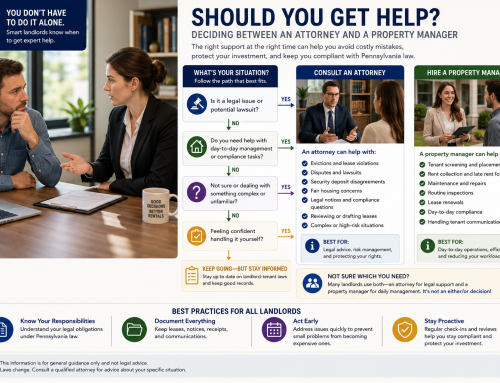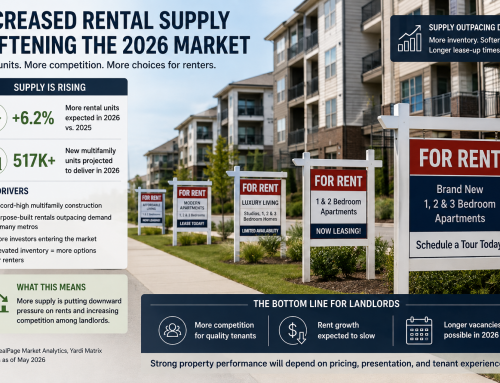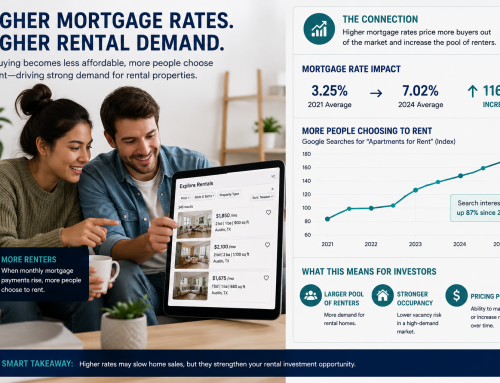

For most Philadelphia landlords, self-managing looks cheaper until you account for what you can’t see on the spreadsheet. A professional property management company in Philadelphia typically charges 6-10% of monthly rent. That fee buys leasing, compliance oversight, maintenance coordination, and vendor access. A single bad placement, one prolonged vacancy, or one compliance misstep will often cost more than a full year of management fees.
Most owners do the math the same way. They take their monthly rent, multiply the management percentage, and see a number they’d rather keep. It’s a reasonable instinct. The fee is visible. The alternative costs aren’t.
The problem is that self-managing isn’t free. It’s just a different kind of expense, spread across your time, your risk exposure, and the small operational decisions that quietly shape your returns. Some of those costs land on your P&L. Some don’t show up until something goes wrong.
This post is for Philadelphia landlords who are currently managing their own properties, or seriously considering it, and want to understand what the comparison actually looks like. Not in theory. In practice.
What Self-Managing Actually Costs

The most common version of the self-management calculation goes something like this: skip the 8% fee, pocket an extra $160 a month on a $2,000 unit, and call it a win. Over 12 months, that’s $1,920 saved.
But that math has a few holes.
Time has a dollar value. Landlords who self-manage spend an average of around 4 hours per month per property handling rent collection, maintenance coordination, and tenant communication, according to reports from landlord communities on platforms like BiggerPockets. That figure doubles during turnover seasons or when a maintenance issue runs long. If your time is worth $50 an hour at your primary job or business, those 4 hours a month are already closing the gap on the management fee before anything has gone wrong.
Vacancy is the fastest leak. A $2,000/month unit sitting empty for five weeks costs $2,500 in lost rent. Professional managers maintain active applicant pipelines, structured marketing systems, and leasing processes that move faster than a solo landlord can. Every week shaved off a vacancy period is money directly recovered.
Rent pricing is often set once and forgotten. A common pattern among self-managing owners is keeping rent flat year over year, either to preserve a good tenant relationship or simply because there’s no system prompting a review. Holding rent $100 below market for just one year means $1,200 in lost income. Held two or three years, that gap compounds, and when it comes time to sell, below-market rent directly suppresses the property’s appraised value.
The Three Mistakes That Wipe Out a Year of Savings
The fee math tends to favor self-management until one of three things happens. These are the scenarios where a year’s worth of “savings” disappears in a single month.
Poor tenant screening. Without a structured screening process and professional experience reading application patterns, it’s easy to place a tenant who looks fine on paper and becomes expensive in practice. One non-paying tenant who requires an eviction in Philadelphia can cost $3,000-5,000 in legal fees, lost rent during the process, and turnover costs after. That’s two to three years of management fees gone in one placement.
The 2am maintenance call. This one is less about the money and more about what it signals. When a tenant can’t reach you quickly or the repair takes too long, satisfaction drops and turnover risk rises. Good tenants have options in Philadelphia’s rental market, and a slow maintenance response is one of the most common reasons tenants don’t renew. The cost of a single turnover, including vacancy time, make-ready work, and re-leasing, runs between one and three months of rent.
Underpricing rent. This connects to the pricing point above, but it’s worth being direct: many self-managing landlords underprice because they don’t have current market data. A property management company analyzes comparable rents regularly and adjusts pricing accordingly. Over a three-year hold, consistent underpricing can easily outpace what the management fees would have cost.
The real question isn’t whether you can afford a property manager. It’s whether you can afford what happens
when self-managing goes wrong.
Philadelphia Makes This Harder Than Most Markets
Philadelphia has its own layer of complexity that self-managing landlords have to navigate alone. The regulatory environment here operates at two levels, Pennsylvania state law and additional city requirements, and both change regularly.
A few things Philadelphia landlords are required to manage:
A valid rental license from the Department of Licenses and Inspections (L&I), renewed annually. Renting without one means you may be unable to collect rent or enforce lease terms in court.
A Certificate of Rental Suitability before any tenant moves in.
Lead certification for properties built before 1978, required before renting.
Compliance with Philadelphia’s Fair Practices Ordinance, which prohibits refusing applicants based on source of income, including Section 8 vouchers.
As of December 2, 2025, new security deposit rules: landlords with three or more units who collect more than one month’s deposit must allow tenants to pay the excess in three monthly installments.
Non-compliance consequences include daily fines, loss of the ability to collect rent, and loss of eviction rights in court. These aren’t rare edge cases. They’re the kind of requirements that catch self-managing landlords off guard because the rules don’t announce themselves when they change.
A 2026 Philadelphia rental compliance guide notes that proposed enforcement measures would tie property owners’ ability to operate to documented compliance with licensing requirements. For self-managing landlords carrying all of this alone, keeping up is a part-time job.
Self-Managing vs. Property Management: How They Actually Compare
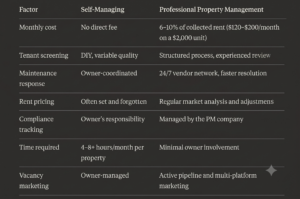
The table captures the structure. What it can’t capture is the asymmetry of risk. When self-management goes well, you save the fee. When it goes wrong, the cost of one bad outcome can exceed multiple years of management fees.
When Self-Managing Makes Sense (and When It Doesn’t)

Self-managing might work if you:
- Own one property, live nearby, and have flexible time to respond to tenants and maintenance
- Have established contractor relationships and experience reading rental applications
- Enjoy the operational side of property ownership and treat it as an active business
Even then, Philadelphia’s compliance requirements are significant enough that staying current on L&I requirements, lead certifications, and lease law changes takes consistent attention.
Consider professional management if you:
- Have a primary job, business, or other income-generating activity demanding your time
- Own more than one property, or plan to grow your portfolio
- Have experienced a difficult tenancy, prolonged vacancy, or compliance issue and want a system to prevent the next one
Philadelphia property management fees in the 6–10% range are easier to justify once you price in what’s on the other side: vendor access, leasing systems, compliance oversight, and someone responsible for the 2am call who isn’t you.
What to Look for When Evaluating a Property Manager in Philadelphia

Not every property management company operates the same way. Before signing a management agreement, it’s worth understanding what’s actually included.
Pricing structure. Ask whether the quoted percentage is all-inclusive or whether leasing fees, maintenance markups, and renewal fees are separate. A lower headline rate can easily become more expensive once the other charges are added.
Tenant placement process. How do they screen? What tools do they use? How do they handle income verification and rental history? This is where a great management company earns its fee, and where a weak one creates problems.
Compliance knowledge. A good Philadelphia property manager should be able to walk you through the current L&I licensing process, lead certification requirements, and the new security deposit installment rules. If they can’t, that’s a signal.
Reporting and communication. You should be able to see your financial performance, maintenance activity, and lease status without having to ask. Owners who feel in the dark about their own property often end up more anxious, not less.
Ready to Get a Second Set of Eyes on Your Property?
If you’re weighing whether professional management makes sense for your Philadelphia rental, we’re happy to talk through the numbers with you, no pressure, no sales process.
You can also explore how Rentwell structures [full-service property management in Philadelphia] for owners across the Philadelphia and Pittsburgh metro areas.
Frequently Asked Questions
How much does property management cost in Philadelphia?
Property management fees in Philadelphia typically range from 6–10% of monthly rent collected, often with a separate leasing fee when a new tenant is placed. On a $2,000/month rental, that’s roughly $120–$200 per month for ongoing management. The exact structure varies by company, so it’s worth asking what’s included in the base fee versus billed separately.
Is it worth hiring a property manager in Philadelphia?
For most landlords with a primary job or multiple properties, yes. The fee buys compliance oversight, tenant screening, maintenance coordination, and leasing systems that are difficult to replicate alone. In Philadelphia specifically, the regulatory environment adds another layer of complexity that makes professional management easier to justify.
What are the hidden costs of self-managing a rental property?
The costs most often underestimated are time (4+ hours per month per property), vacancy losses from slower leasing, below-market rent from infrequent pricing reviews, and the cost of a difficult tenancy or eviction. A single eviction in Philadelphia can run $3,000–$5,000 when you account for legal fees, lost rent, and turnover costs.
What compliance requirements do Philadelphia landlords need to know about in 2026?
Philadelphia requires a rental license from the Department of Licenses and Inspections (L&I) for every rental unit, renewed annually. Properties built before 1978 require lead certification before renting. A Certificate of Rental Suitability is required before any tenant move-in. As of December 2025, landlords with three or more units must offer tenants the option to pay security deposits exceeding one month’s rent in installments. Non-compliance can result in daily fines and loss of rent collection rights.
Can I start with self-management and switch to a property manager later?
Yes, and many owners do. The transition is usually straightforward, a good property management company will handle the transfer of tenant records and set up your owner portal without disrupting your cash flow. The more relevant question is whether waiting until something goes wrong is the right trigger for making the switch.
What’s the difference between full-service property management and back-office support?
Full-service management means the company handles everything, leasing, maintenance, compliance, tenant communication, and financial reporting. Back-office support is a hybrid model where experienced investors retain strategic control but hand off the operational and administrative work. Both structures can make sense depending on how hands-on you want to be with your portfolio.